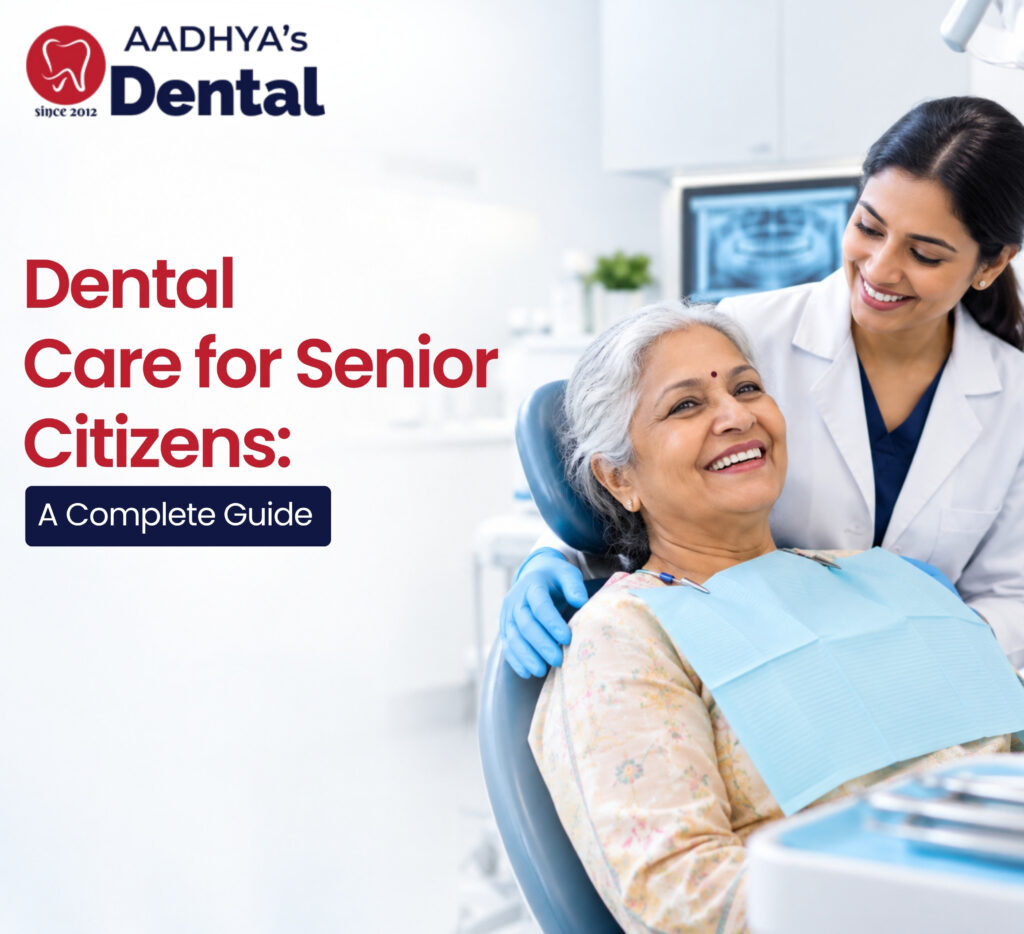
As we grow older, taking care of our teeth and gums becomes just as important as looking after the rest of our health. However, dental problems in senior citizens are sometimes overlooked because tooth loss, dry mouth, sensitivity, or difficulty chewing may be considered a normal part of ageing.
They don’t have to be.
With regular dental check-ups, good oral hygiene, appropriate nutrition and timely treatment, many older adults can maintain comfortable, functional teeth and healthy gums for years.
At Aadhya’s Dental, Nallagandla, Hyderabad, we understand that dental care for senior citizens often requires a more individualised approach. Older adults may have multiple dental concerns at the same time, including missing teeth, gum disease, worn-out teeth, dental decay, dentures, dry mouth and difficulty maintaining oral hygiene.
Whether you are looking for a senior citizen dentist in Nallagandla, a dental clinic near Tellapur for elderly patients, or comprehensive dental care for an ageing parent or grandparent, the right dental evaluation can make a significant difference to comfort and quality of life.
Why Is Dental Care Important for Senior Citizens?
Oral health has a direct impact on everyday life.
Healthy teeth and gums help older adults:
- Eat a wider variety of foods
- Chew comfortably
- Speak clearly
- Maintain facial support
- Smile confidently
- Avoid dental pain and infections
- Maintain better oral hygiene
- Use dentures or dental implants comfortably
When dental problems are left untreated, they can gradually affect eating habits and overall well-being.
For example, a senior citizen with painful or missing teeth may begin avoiding harder foods such as fruits, vegetables, nuts or certain protein-rich foods. Over time, this can unnecessarily limit their diet.
That is why preventive dental care for elderly people is so important.
Common Dental Problems in Senior Citizens
Older adults can experience many of the same dental conditions as younger people, but certain problems become more common with age.
1. Tooth Decay
Cavities can develop at any age.
In older adults, decay may occur around existing fillings, crowns, or exposed root surfaces. Receding gums can expose the roots of teeth, making them more vulnerable to decay.
Dry mouth can also increase the risk of cavities because saliva normally helps protect teeth.
Regular dental examinations can help detect small cavities before they become painful or require extensive treatment.
2. Gum Disease
Gum disease is one of the most important oral health concerns in older adults.
It can cause:
- Bleeding gums
- Red or swollen gums
- Persistent bad breath
- Gum recession
- Loose teeth
- Bone loss around teeth
- Eventually, tooth loss
Importantly, gum disease is not simply an unavoidable consequence of ageing.
With appropriate periodontal care, professional cleaning and good home oral hygiene, gum disease can often be managed effectively.
If you notice that an elderly family member has loose teeth, bleeding gums or persistent bad breath, a dental evaluation should not be delayed.
3. Tooth Loss
Tooth loss can occur due to untreated decay, gum disease, trauma or other dental problems.
Missing teeth can make chewing difficult and may affect speech and confidence.
Depending on the individual’s oral and general health, tooth replacement options may include:
- Dental bridges
- Partial dentures
- Complete dentures
- Implant-supported dentures
- Dental implants
- Full-mouth implant rehabilitation in selected cases
The best option depends on the person’s bone condition, gum health, medical history, functional needs and expectations.
4. Denture Problems
Many senior citizens rely on dentures.
Over time, however, dentures may become loose because the shape of the gums and underlying jawbone changes.
A poorly fitting denture can cause:
- Gum irritation
- Painful spots
- Difficulty chewing
- Difficulty speaking
- Denture movement
- Reduced confidence while eating in public
If your dentures no longer fit comfortably, don’t simply tolerate the discomfort.
A dentist can assess whether the denture needs adjustment, relining, replacement or whether an implant-supported solution may be appropriate.
5. Dry Mouth
Dry mouth, medically known as xerostomia, is relatively common among older adults and may sometimes be associated with medications or other health conditions.
Reduced saliva can contribute to:
- Increased cavity risk
- Difficulty swallowing
- Difficulty speaking
- Mouth discomfort
- Bad breath
- Increased susceptibility to oral infections
If a senior citizen frequently complains of a dry or sticky mouth, it is worth discussing the problem with their dentist and physician.
Do not stop prescribed medication without medical advice.
6. Sensitive Teeth
Receding gums can expose parts of the tooth that are more sensitive.
This may result in discomfort when consuming:
- Cold drinks
- Hot beverages
- Sweet foods
- Sour foods
Sensitivity can sometimes be managed with appropriate toothpaste and preventive care, but persistent sensitivity should be evaluated because it can also be caused by cavities, cracks or other dental conditions.
Dental Care Tips for Senior Citizens
Good oral health doesn’t necessarily require a complicated routine.
Brush Twice a Day
Use a soft-bristled toothbrush and fluoride toothpaste.
If manual brushing becomes difficult because of arthritis, reduced hand strength or limited mobility, an electric toothbrush may be easier to handle.
Clean Between the Teeth
Brushing alone cannot effectively clean every surface between teeth.
Depending on the individual’s situation, interdental brushes, floss or other cleaning aids may be recommended.
For elderly patients with bridges, implants or dentures, specialised cleaning techniques may be necessary.
Clean Dentures Properly
Dentures should be cleaned regularly according to your dentist’s instructions.
They should not simply be treated like natural teeth.
Your dentist can demonstrate the correct cleaning routine and advise whether the dentures should be removed overnight.
Drink Enough Water
Adequate hydration can be helpful for people experiencing dry mouth.
However, persistent dry mouth needs professional evaluation, particularly when it is associated with medications or medical conditions.
Reduce Frequent Sugary Snacks
Frequent consumption of sugary foods and drinks increases the risk of tooth decay.
Instead of continuously snacking throughout the day, try to keep sugary foods to mealtimes where possible.
Don’t Ignore Dental Pain
Older adults sometimes delay dental treatment because they assume the discomfort is temporary.
Dental pain is a warning sign, not something that should simply be accepted as part of getting older.
How Often Should Senior Citizens Visit the Dentist?
There isn’t one universal interval that works for every older adult.
Some people may need dental visits every six months, while others with active gum disease, multiple dental restorations, dentures or higher cavity risk may require more frequent monitoring.
A dentist can recommend an appropriate recall schedule after evaluating the individual’s oral health.
Regular visits can help identify problems before they become painful or expensive to treat.
For further information about how to prepare for your first visit to a dental clinic Also Read : https://aadhyasdental.com/how-to-prepare-for-your-first-visit-to-a-dental-clinic/
Dental Implants for Senior Citizens: Are They Possible?
A common misconception is that dental implants are only suitable for younger people.
Age by itself does not automatically rule out dental implants.
The important considerations include:
- General health
- Gum health
- Bone availability
- Oral hygiene
- Smoking and tobacco habits
- Medical conditions and medications
- Ability to maintain regular dental care
Some older adults may be excellent candidates for implants, while others may benefit more from dentures or other alternatives.
For seniors with significant tooth loss, an implant consultation can help determine whether dental implants or implant-supported dentures are appropriate.
Dentures vs Dental Implants for Seniors
There is no single “best” option for every senior citizen.
Dentures
Dentures are removable and can replace several or all missing teeth. They may be suitable for patients who are not candidates for implants or who prefer a removable solution.
Dental Implants
Implants are placed into the jawbone and can support individual crowns, bridges or implant-supported dentures.
They can provide improved stability and chewing function in appropriately selected patients.
Implant-Supported Dentures
For some elderly patients, implant-supported dentures can offer a middle ground between conventional removable dentures and a fully fixed implant rehabilitation.
A detailed examination is necessary before choosing the most appropriate solution.
Dental Care for Bedridden or Homebound Senior Citizens
Some elderly patients have difficulty travelling to a dental clinic because of limited mobility, age-related weakness or other circumstances.
For such patients, family members should discuss available dental care options with the dental team.
Even when a person cannot easily visit a clinic, maintaining oral hygiene remains important.
Caregivers can assist with:
- Tooth brushing
- Denture cleaning
- Mouth rinsing
- Monitoring for ulcers or sores
- Checking for swelling
- Looking for loose teeth
- Identifying changes in eating or chewing
If you notice unexplained bleeding, swelling, persistent mouth sores or difficulty eating, professional dental advice should be sought.
Dental Care for Seniors With Multiple Medical Conditions
Many older adults take multiple medications or have several medical conditions.
This makes it especially important to provide the dentist with an updated list of:
- Prescription medications
- Over-the-counter medications
- Allergies
- Relevant medical conditions
- Previous surgeries
- Recent medical treatments
This information helps the dental team plan treatment safely.
Never stop or change a prescribed medication simply because you are undergoing dental treatment unless your treating physician advises you to do so.
What About Dental Treatment for Patients Taking Blood Thinners?
Some elderly patients take anticoagulant or antiplatelet medications.
This does not automatically mean dental treatment cannot be performed.
However, the dentist needs to know about these medications before procedures such as tooth extraction or oral surgery.
Medication changes should only be made when advised by the appropriate medical and dental professionals.
Why Preventive Dental Care Matters More With Age
Prevention is often easier than complex treatment.
A small cavity can sometimes be treated relatively simply.
A neglected cavity may eventually lead to:
deep decay → infection → pain → root canal treatment or extraction → tooth replacement
Similarly:
untreated gum disease → bone loss → loose teeth → tooth loss → difficulty chewing
Regular dental examinations can help interrupt these cycles early.
Choosing a Dental Clinic for Senior Citizens in Nallagandla
When choosing dental care for an elderly family member, convenience and comfort matter.
If you are looking for a senior citizen dentist in Nallagandla, a family dental clinic near Tellapur, or a dental clinic near Gachibowli for elderly patients, consider whether the clinic can provide comprehensive care rather than addressing only one dental problem at a time.
At Aadhya’s Dental, Nallagandla, senior patients can receive comprehensive dental evaluation and treatment planning based on their individual needs.
The clinic is conveniently accessible for patients from Nallagandla, Tellapur, Lingampally, BHEL, Gopanpally, Gachibowli, Miyapur and surrounding areas of Hyderabad.
For elderly patients, the clinic environment and accessibility can also be important considerations for families planning dental visits.
When Should You Take an Elderly Family Member to the Dentist?
Don’t wait until there is severe pain.
Schedule a dental examination if your parent or grandparent has:
- Bleeding gums
- Loose teeth
- Difficulty chewing
- Repeated dental pain
- Bad breath that doesn’t improve
- Dentures that keep moving
- Pain while wearing dentures
- Broken or chipped teeth
- Dry mouth
- Recurrent mouth ulcers
- Tooth sensitivity
- Difficulty brushing or maintaining oral hygiene
- A noticeable change in their bite
A timely evaluation can often prevent a relatively manageable problem from becoming complicated.
Frequently Asked Questions About Dental Care for Senior Citizens
1. How often should elderly people visit the dentist?
The frequency depends on their oral health. Many seniors may benefit from routine six-monthly examinations, while patients with gum disease, frequent cavities, dentures or other concerns may need more frequent visits.
2. Is tooth loss a normal part of ageing?
No. Although tooth loss becomes more common with age, it is not an inevitable part of getting older. Tooth loss is often associated with preventable or treatable conditions such as dental decay and gum disease.
3. Can senior citizens get dental implants?
Yes, many older adults can be candidates for dental implants. Age alone is not a contraindication. Bone condition, gum health, general health, medications and ability to maintain oral hygiene are among the factors that need to be evaluated.
4. What is better for seniors: dentures or implants?
There is no universal answer. Conventional dentures, implant-supported dentures and fixed dental implants each have advantages and limitations. A dentist can recommend an option based on the patient’s individual needs.
5. Why do my dentures feel loose after several years?
The jawbone and gum tissues can gradually change shape after tooth loss, which may cause older dentures to become loose. Your dentist can determine whether adjustment, relining or replacement is appropriate.
6. How can I help an elderly parent maintain oral hygiene?
Help them establish a simple daily routine involving brushing twice a day, cleaning between teeth where possible, cleaning dentures correctly and attending regular dental check-ups. If mobility or memory problems make oral hygiene difficult, a caregiver may need to assist.
7. Can dry mouth cause cavities in older adults?
Yes. Reduced saliva can increase the risk of dental decay because saliva naturally helps protect the teeth. Persistent dry mouth should be discussed with a dentist and, where appropriate, the patient’s physician.
8. Where can I find dental care for senior citizens near Tellapur and Nallagandla?
Families looking for senior citizen dental care near Tellapur, Nallagandla, Lingampally or Gachibowli can consult Aadhya’s Dental, Nallagandla, for comprehensive dental evaluation and individualised treatment planning.
Conclusion
Growing older does not mean that you have to accept tooth pain, loose teeth, uncomfortable dentures or difficulty chewing as “normal.”
With the right preventive care and timely treatment, senior citizens can maintain their oral health and enjoy a better quality of life.
Whether it is gum disease treatment, dental fillings, dentures, root canal treatment, tooth replacement or dental implants, the first step is understanding the condition and choosing the right treatment based on the individual’s needs.
If you are searching for a dental clinic for senior citizens in Nallagandla, dentist near Tellapur, family dentist near Lingampally, or comprehensive dental care near Gachibowli, Aadhya’s Dental, Nallagandla provides a convenient option for families seeking professional dental care for older adults.
Most importantly, don’t wait for a dental emergency. Regular dental check-ups can help seniors stay comfortable, eat better and maintain their natural smile for longer.
For senior dental care, visit Aadhya Dental Clinic or call +91-7396235802 to book an appointment.