Unable to Open Your Mouth Properly? Dr Krishna Kishore Explains
the Causes and Treatment of Lockjaw
Imagine waking up one morning and realising that you cannot fully open your mouth. Eating becomes difficult, speaking feels uncomfortable, brushing your teeth is challenging, and even yawning causes pain. This condition, commonly referred to as lock jaw, can significantly affect your quality of life and may indicate an underlying problem involving the jaw joints, muscles, wisdom teeth, infection, or facial trauma.
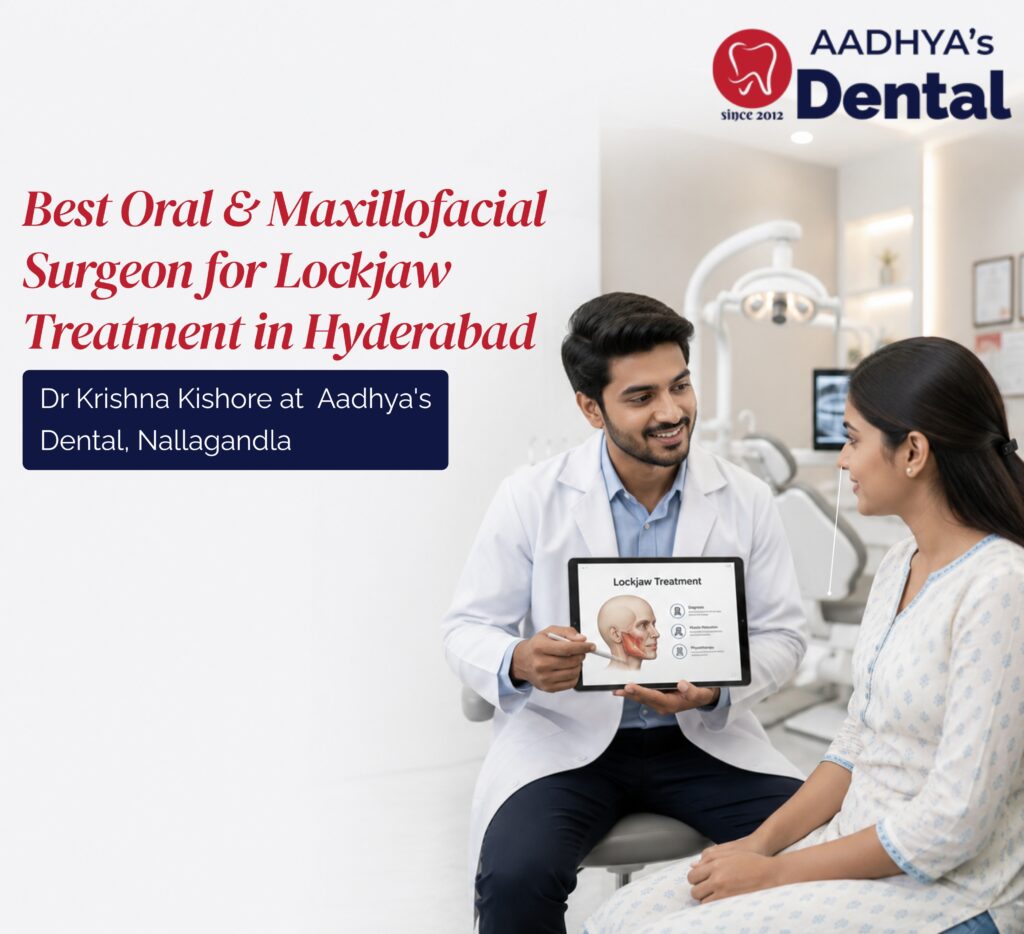
According to Dr Krishna Kishore, an experienced Oral and Maxillofacial Surgeon at Aadhya’s Dental, Nallagandla, lock jaw is not a disease by itself but a symptom of an underlying condition that requires proper diagnosis and timely treatment.
If you are searching online for the best oral and maxillofacial surgeon for lock jaw treatment in Hyderabad, TMJ specialist near Tellapur, jaw pain treatment in Nallagandla, or oral surgeon near Gachibowli, this comprehensive guide will help you understand the causes, symptoms, diagnosis, treatment options, and preventive measures for lock jaw.
Aadhya’s Dental proudly serves patients from Nallagandla, Tellapur, Gopanpally, Vattinagulapally, Lingampally, Gachibowli, Financial District, Kondapur, Kollur, Osman Nagar, Chandanagar, Miyapur, and surrounding areas of Hyderabad.
What Is Lock Jaw?
Lock jaw, medically referred to as trismus, is a condition in which a person is unable to open the mouth fully due to pain, muscle spasm, joint problems, infection, or mechanical obstruction.
A healthy adult can usually open the mouth approximately 35–50 mm, which is about the width of three fingers placed vertically between the upper and lower front teeth.
When mouth opening becomes significantly restricted, everyday activities such as eating, speaking, yawning, brushing, and dental treatment become difficult.
Lock jaw can develop suddenly or gradually, depending on its cause.
What Causes Lock Jaw?
Several conditions can lead to restricted mouth opening. Identifying the exact cause is essential because treatment varies depending on the underlying problem.
1. Impacted Wisdom Teeth
One of the most common causes of lockjaw is an infected or impacted wisdom tooth.
When infection develops around a partially erupted wisdom tooth, it may cause:
- Pain while chewing
- Swelling around the gums
- Difficulty opening the mouth
- Pain radiating toward the ear
- Bad taste due to infection
Timely removal of the wisdom tooth often resolves the problem.
2. Temporomandibular Joint (TMJ) Disorders
The temporomandibular joints connect the lower jaw to the skull.
Inflammation, internal disc displacement, arthritis, or excessive strain may cause:
- Jaw locking
- Clicking sounds
- Pain while chewing
- Difficulty opening the mouth
- Headaches
- Ear pain
TMJ disorders require careful evaluation by an oral and maxillofacial surgeon.
3. Muscle Spasm
The muscles responsible for jaw movement may go into spasm due to:
- Teeth grinding (bruxism)
- Stress
- Trauma
- Overstretching during dental treatment
- Excessive chewing
Muscle-related lockjaw usually improves with conservative treatment.
4. Dental Infections
Untreated tooth infections can spread into surrounding tissues and muscles.
Symptoms may include:
- Severe toothache
- Facial swelling
- Fever
- Difficulty swallowing
- Reduced mouth opening
Prompt treatment is essential to prevent the infection from spreading further.
5. Facial Trauma
Accidents involving the jaw can cause:
- Jaw fractures
- Joint injuries
- Muscle damage
- Restricted jaw movement
These injuries require immediate evaluation by an oral and maxillofacial surgeon.
6. Post-Surgical Jaw Stiffness
Temporary jaw stiffness may occur after:
- Wisdom tooth removal
- Oral surgery
- Jaw surgery
This usually improves with prescribed exercises and medications.
7. Oral Submucous Fibrosis (OSMF)
OSMF is a chronic condition that causes progressive stiffness of the oral tissues.
It is strongly associated with chewing areca nut (supari), gutkha, and similar products.
Symptoms include:
- Burning sensation while eating spicy food
- Progressive reduction in mouth opening
- Difficulty eating
- Tightness of the cheeks
Early diagnosis is important because OSMF carries a risk of malignant transformation and requires long-term monitoring.
What Are the Symptoms of Lock Jaw?
Patients with trismus may experience:
- Difficulty opening the mouth
- Pain while chewing
- Jaw stiffness
- Clicking or popping sounds
- Pain near the ears
- Difficulty brushing teeth
- Trouble speaking
- Difficulty swallowing
- Headaches
- Facial swelling
- Tooth pain associated with limited mouth opening
The severity varies depending on the underlying cause.
When Is Lock Jaw a Dental Emergency?
You should seek immediate professional care if you experience:
- Sudden inability to open the mouth
- Rapidly increasing facial swelling
- Fever along with jaw pain
- Difficulty swallowing
- Difficulty breathing
- Severe pain after a tooth infection
- Jaw injury following an accident
Delaying treatment may allow infections to spread into deeper tissues of the face and neck.
How Is Lock Jaw Diagnosed?
At Aadhya’s Dental, Dr Krishna Kishore performs a comprehensive evaluation to determine the exact cause.
Diagnosis may include:
- Detailed medical and dental history
- Clinical examination
- Measurement of mouth opening
- Jaw joint assessment
- Examination of wisdom teeth
- Digital dental X-rays
- Panoramic imaging
- CBCT scan when indicated
- Evaluation of bite and jaw function
An accurate diagnosis is essential because treatment differs significantly depending on whether the cause is muscular, joint-related, infectious, or surgical.
Also Read :https://aadhyasdental.com/choosing-the-perfect-time-for-your-dental-visit/
Treatment Options for Lock Jaw
Treatment depends entirely on the underlying diagnosis.
Management of Wisdom Tooth Infection
If an impacted wisdom tooth is responsible, treatment may include:
- Infection control
- Pain management
- Professional cleaning
- Surgical wisdom tooth removal after the acute infection is controlled
TMJ Disorder Treatment
Depending on the condition, management may include:
- Jaw exercises
- Bite splints
- Medications
- Physiotherapy
- Lifestyle modifications
- Minimally invasive TMJ procedures in selected cases
Management of Dental Infections
Treatment may involve:
- Root canal treatment
- Drainage of infection
- Extraction of non-restorable teeth
- Antibiotics when clinically indicated
Muscle Spasm Treatment
Patients may benefit from:
- Anti-inflammatory medication
- Muscle relaxants (when appropriate)
- Warm compresses
- Soft diet
- Physiotherapy exercises
Surgical Treatment
Certain conditions require surgical intervention, including:
- Impacted wisdom teeth
- Jaw fractures
- Advanced TMJ disorders
- Oral pathology
- Space infections
- Corrective jaw procedures
As an Oral and Maxillofacial Surgeon, Dr Krishna Kishore is trained to diagnose and manage both routine and complex surgical conditions affecting the face, jaws, and oral cavity.
What Can You Do at Home Before Visiting the Dentist?
While professional evaluation is essential, these measures may help reduce discomfort:
- Eat soft foods.
- Avoid forcing your mouth open.
- Apply warm compresses unless advised otherwise.
- Stay hydrated.
- Avoid chewing gum.
- Refrain from tobacco and areca nut products.
- Take only medications recommended by your healthcare provider.
These measures are supportive and do not replace professional diagnosis.
Can Lock Jaw Be Prevented?
Although not every case is preventable, the risk can be reduced by:
- Treating wisdom teeth problems early
- Addressing tooth infections promptly
- Wearing a mouthguard if you grind your teeth
- Avoiding areca nut, gutkha, and tobacco products
- Maintaining good oral hygiene
- Attending regular dental check-ups
- Managing stress to reduce jaw clenching
Early intervention often prevents more serious complications.
Why Choose Dr Krishna Kishore for Lock Jaw Treatment?
Patients from Nallagandla, Tellapur, Gopanpally, Vattinagulapally, Lingampally, Gachibowli, Financial District, Kondapur, Chandanagar, Osman Nagar, Kollur, and nearby areas choose Dr Krishna Kishore because of his expertise in diagnosing and treating complex conditions affecting the mouth, jaws, and face.
At Aadhya’s Dental, patients benefit from:
- Comprehensive oral and maxillofacial evaluation
- Advanced digital imaging
- Surgical wisdom tooth management
- TMJ disorder assessment
- Management of facial infections
- Jaw trauma care
- Conservative treatment whenever appropriate
- Modern surgical techniques
- Strict sterilisation protocols
- Personalised treatment planning
Every patient receives an individualised approach based on the underlying cause rather than simply treating the symptoms.
Serving Patients Across Hyderabad
Conveniently located in Nallagandla, Aadhya’s Dental welcomes patients from:
- Tellapur
- Vattinagulapally
- Gopanpally
- Lingampally
- Gachibowli
- Financial District
- Kondapur
- Chandanagar
- Osman Nagar
- Kollur
- Miyapur
- BHEL
- HCU Area
- Serilingampally
If you’re searching for the best oral surgeon near Tellapur, TMJ specialist in Nallagandla, or lock jaw treatment near Gachibowli, our clinic is easily accessible from all these locations.
Conclusion
Lock jaw should never be ignored. Whether it is caused by an impacted wisdom tooth, TMJ disorder, muscle spasm, infection, trauma, or another condition, early diagnosis greatly improves the chances of successful treatment.
If you’re experiencing difficulty opening your mouth, pain while chewing, or persistent jaw stiffness, seek professional evaluation rather than relying on temporary home remedies.
Dr Krishna Kishore at Aadhya’s Dental provides comprehensive diagnosis and treatment for jaw disorders, wisdom tooth problems, oral infections, and other oral and maxillofacial conditions, helping patients regain comfortable jaw function and improve their quality of life.
Frequently Asked Questions (FAQs)
1. What is lock jaw?
Lock jaw, or trismus, is a condition in which the mouth cannot open fully because of muscle spasm, joint problems, infection, trauma, or other underlying causes.
2. Can an impacted wisdom tooth cause lock jaw?
Yes. Infection around an impacted or partially erupted wisdom tooth is one of the most common causes of restricted mouth opening.
3. Is lockjaw always an emergency?
Not always, but if it is accompanied by swelling, fever, difficulty swallowing, or breathing problems, immediate medical or dental attention is essential.
4. Can TMJ disorders cause jaw locking?
Yes. Problems affecting the temporomandibular joint can cause pain, clicking, restricted movement, and episodes of jaw locking.
5. How is lockjaw diagnosed?
Diagnosis involves a detailed history, clinical examination, assessment of jaw movement, and imaging such as digital X-rays or CBCT scans when necessary.
6. Can lockjaw be treated without surgery?
Many cases caused by muscle spasm or mild TMJ disorders improve with medications, physiotherapy, jaw exercises, and lifestyle modifications. Surgical treatment is reserved for conditions that require it.
7. How long does recovery take?
Recovery depends on the underlying cause. Some muscular conditions improve within days, while infections or surgical conditions may require a longer healing period.
8. Can stress cause lockjaw?
Yes. Stress-related teeth grinding and jaw clenching can contribute to muscle spasm and reduced mouth opening in some individuals.
9. When should I consult an oral and maxillofacial surgeon?
You should seek evaluation if you have persistent difficulty opening your mouth, jaw pain, facial swelling, wisdom tooth problems, jaw injuries, or suspected TMJ disorders.
10. Why choose Dr Krishna Kishore for lockjaw treatment?
Dr Krishna Kishore offers specialised expertise in oral and maxillofacial surgery, advanced diagnostic techniques, personalised treatment planning, and comprehensive care for patients from Nallagandla, Tellapur, and surrounding Hyderabad areas.
Website: https://aadhyasdental.com/
Address: Aadhya’s Dental | Best Dental Clinic in Nallagandla
Phone: +91-73962 35802