Losing teeth can affect more than just your smile. It can make chewing difficult, impact speech, and reduce confidence. Dental implants are a popular solution for replacing missing teeth, but some patients may not have enough bone in their upper jaw to support conventional dental implants. In such situations, zygomatic implants can offer an advanced alternative.
For patients with severe upper jaw bone loss, zygomatic implants in Hyderabad may provide an opportunity to restore missing teeth without relying on traditional bone support. At Aadhya’s Dental Clinic, Nallagandla, patients can consult experienced dental specialists to understand advanced implant options based on their oral health and individual needs.
What Are Zygomatic Implants?
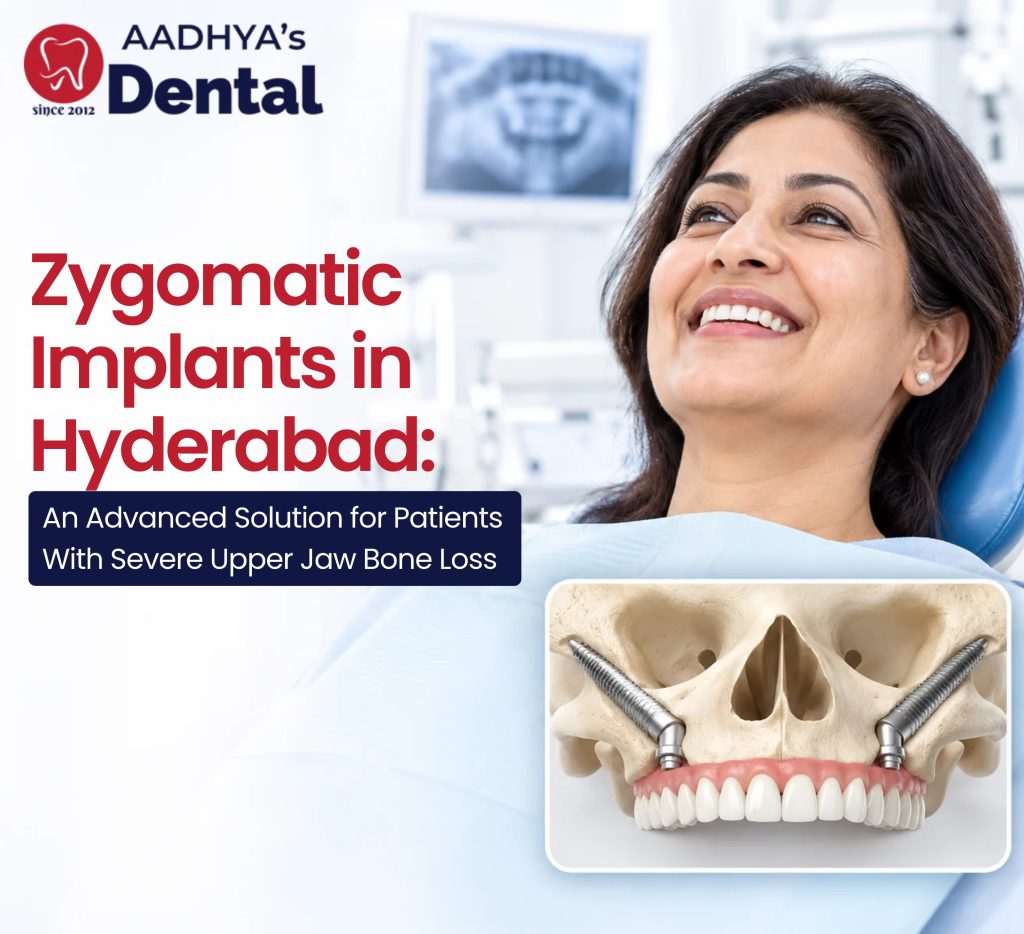
Zygomatic implants are specialised dental implants designed for patients who have significant bone loss in the upper jaw. Unlike conventional dental implants, which are placed directly into the jawbone, zygomatic implants are anchored into the zygomatic bone, commonly known as the cheekbone.
The cheekbone is generally denser and can provide strong support for these specialised implants. This makes them a possible treatment option for patients who cannot undergo conventional upper jaw implant placement because of insufficient bone volume.
Zygomatic implants are longer than traditional dental implants and require advanced surgical planning and expertise.
Also Read: https://aadhyasdental.com/best-zygoma-implant-clinic-in-nallagandla-hyderabad-aadhyas-dental-clinic/
Why Do Some Patients Experience Severe Upper Jaw Bone Loss?
The upper jawbone plays an important role in supporting natural teeth and dental implants. When teeth are missing for a long time, the surrounding bone may gradually shrink because it no longer receives normal stimulation from tooth roots.
Some common reasons for severe upper jaw bone loss include:
Long-term missing teeth: When teeth are missing for several years, the jawbone may gradually lose volume.
Advanced gum disease: Periodontal disease can damage the supporting bone around natural teeth.
Previous tooth extractions: Bone loss may occur following tooth removal.
Failed dental implants: Previous implant complications may affect the available bone.
Age-related changes: Natural changes in the oral structures can contribute to bone loss.
Long-term denture use: Some patients experience progressive bone resorption while wearing removable dentures.
When the upper jawbone becomes too thin or weak, placing conventional dental implants may become challenging.
How Do Zygomatic Implants Work?
Zygomatic implants are placed through a specialised surgical procedure. Instead of depending on the upper jawbone for support, the implants are anchored into the cheekbone.
The treatment generally involves the following steps:
1. Initial Dental Consultation
The first step is a detailed consultation with an implant specialist. The dentist evaluates the patient’s oral health, medical history, missing teeth, and previous dental treatments.
2. Advanced Diagnostic Imaging
A CBCT scan or other appropriate imaging may be recommended to examine the upper jawbone and cheekbone. These images help the specialist understand the bone structure and plan the implant placement.
3. Personalised Treatment Planning
Based on the scan results, the dental team determines whether zygomatic implants are suitable. The number, position, and type of implants depend on the patient’s bone condition and restoration requirements.
4. Implant Placement Surgery
The procedure is performed by a qualified oral and maxillofacial surgeon or an appropriately trained implant specialist. The implants are carefully positioned into the cheekbone to provide stable support.
5. Fixed Teeth Restoration
Depending on the patient’s healing, implant stability, and clinical condition, a temporary or final fixed dental prosthesis may be provided. The dentist will determine the appropriate restoration timeline.
Who Is a Suitable Candidate for Zygomatic Implants?
Zygomatic implants are not required for every patient with missing teeth. They are generally considered for individuals with severe bone loss in the upper jaw.
You may be evaluated for this treatment if:
- You have lost several or all of your upper teeth.
- You have insufficient upper jawbone for conventional implants.
- You have been advised that traditional implants are not suitable.
- You have experienced bone loss after wearing dentures for many years
- You have previously undergone unsuccessful upper jaw implant treatment.
- You want to explore fixed teeth replacement options.
A detailed clinical examination and advanced imaging are necessary before deciding whether this treatment is appropriate.
Benefits of Zygomatic Implants
Zygomatic implants can offer several advantages for carefully selected patients.
1. An Option for Severe Bone Loss
One of the main advantages is that these implants can provide support even when the upper jawbone has significant bone loss.
2. May Reduce the Need for Bone Grafting
In selected cases, zygomatic implants can avoid the need for extensive bone grafting procedures. However, treatment requirements vary from patient to patient.
3. Support for Fixed Teeth
Zygomatic implants can support fixed dental restorations, helping eligible patients replace missing teeth with a more stable alternative to removable dentures.
4. Improved Chewing Function
Once the final restoration is completed, patients may experience improved chewing ability compared with conventional removable dentures.
5. Advanced Treatment Option
This technique provides another possibility for patients who have been told that conventional dental implants are difficult because of insufficient upper jawbone.
Zygomatic Implants vs Conventional Dental Implants
Both treatments are designed to replace missing teeth, but their placement and suitability differ.
| Feature | Conventional Implants | Zygomatic Implants |
| Placement | Upper or lower jawbone | Cheekbone |
| Bone requirement | Adequate jawbone needed | Designed for severe upper jaw bone loss |
| Implant length | Generally shorter | Generally longer |
| Bone grafting | May be needed | May be avoided in selected cases |
| Treatment planning | Based on jawbone condition | Requires specialised surgical planning |
The right option depends on the patient’s bone structure, oral health, and overall treatment goals.
Are Zygomatic Implants Safe?
Zygomatic implants are an established advanced implant technique, but like any surgical procedure, they involve certain risks.
Possible complications include infection, sinus-related problems, bleeding, implant failure, and soft tissue complications. Careful diagnosis, surgical planning, appropriate case selection, and regular follow-up are important for reducing risks.
Patients should discuss the benefits, limitations, alternatives, and possible complications with their implant specialist before proceeding.
Why Choose Aadhya’s Dental Clinic in Nallagandla, Hyderabad?
Choosing the right dental team is important when considering advanced procedures such as zygomatic implants. Patients need proper diagnosis, personalised treatment planning, and guidance throughout the implant process.
At Aadhya’s Dental Clinic, Nallagandla, Hyderabad, patients can consult:
Dr Mrudula – Periodontist and Oral Implantologist
Dr Mrudula focuses on periodontal health and dental implant-related care, helping patients understand suitable treatment options for missing teeth and supporting oral structures.
Dr P. Krishna Kishore – Oral & Maxillofacial Surgeon and Implantologist
Dr P. Krishna Kishore specialises in oral and maxillofacial surgical care and implantology. His expertise is relevant when evaluating complex implant cases that require advanced surgical assessment.
Together, these specialists can help patients understand their dental condition and explore appropriate treatment options based on individual clinical requirements.
Also Read : https://aadhyasdental.com/zygomatic-implants-in-hyderabad-expert-care-at-aadhyas-dental-nallagandla/
What Is the Recovery Process After Zygomatic Implant Surgery?
Recovery varies depending on the complexity of the procedure, the patient’s general health, and the number of implants placed.
Some patients may experience swelling, mild discomfort, or bruising following surgery. These symptoms generally improve with appropriate postoperative care.
Your dental specialist may recommend:
- Taking prescribed medications as directed.
- Following a soft-food diet during the initial healing period.
- Maintaining proper oral hygiene as instructed.
- Avoiding smoking during the healing period.
- Attending scheduled follow-up appointments.
- Avoiding excessive pressure on the surgical area.
Following your dentist’s instructions is essential for supporting healing and long-term implant success.
Final Thoughts
Severe upper jaw bone loss does not always mean that dental implant treatment is impossible. Zygomatic implants provide an advanced option for selected patients who do not have sufficient bone to support conventional upper jaw implants.
If you are exploring zygomatic implants in Hyderabad, consult the specialists at Aadhya’s Dental Clinic, Nallagandla. Dr Mrudula, Periodontist and Oral Implantologist, and Dr P. Krishna Kishore, Oral & Maxillofacial Surgeon and Implantologist, can help evaluate your condition and guide you towards suitable tooth replacement options.
A detailed examination and personalised treatment plan are the first steps towards restoring your smile and improving your chewing function.
Frequently Asked Questions (FAQs)
1. What are zygomatic implants?
Zygomatic implants are specialised dental implants anchored into the cheekbone to support replacement teeth in patients with severe upper jaw bone loss.
2. Who needs zygomatic implants?
Patients with significant upper jawbone loss who cannot support conventional dental implants may be considered for this treatment.
3. Are zygomatic implants better than conventional implants?
Neither option is universally better. Zygomatic implants are designed for specific cases involving severe upper jaw bone loss, while conventional implants are suitable when adequate bone is available.
4. Can zygomatic implants avoid bone grafting?
In selected cases, zygomatic implants may eliminate the need for extensive bone grafting. Suitability depends on individual clinical findings.
5. Where can I consult for zygomatic implants in Hyderabad?
You can consult Dr Mrudula and Dr P. Krishna Kishore at Aadhya’s Dental Clinic, Nallagandla, Hyderabad, for an evaluation and personalised implant treatment guidance.
Book Your Appointment for Zygomatic Implants in Hyderabad at Aadhya’s Dental Clinic Call 7396235802