
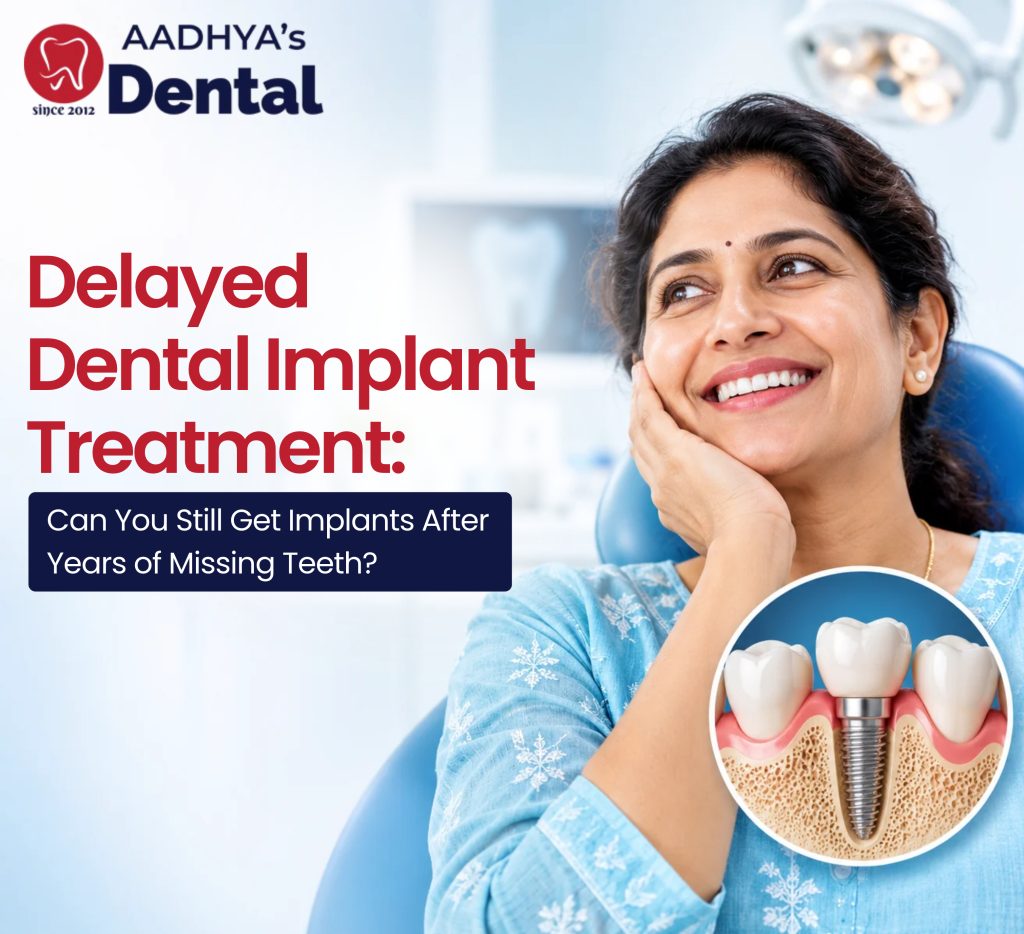
Missing teeth can affect more than just your smile. They can make chewing difficult, affect speech, and gradually change the appearance of your face. Many people delay replacing missing teeth because of financial reasons, fear of dental procedures, or other personal commitments. However, after several years, they may wonder whether dental implants are still possible.
The good news is that you may still be eligible for dental implants even after years of missing teeth. However, the condition of your jawbone, gums, and surrounding teeth plays an important role in determining the right treatment.
At Aadhya’s Dental, Nallagandla, Dr. Mrudula helps patients understand their tooth replacement options and choose suitable solutions based on their oral health needs.
Let’s understand how delayed dental implant treatment works and what you should know before considering implants.
For further information about choosing the perfect time for your dental visit, also read: https://aadhyasdental.com/choosing-the-perfect-time-for-your-dental-visit/
Can You Get Dental Implants After Years of Missing Teeth?
Yes, getting dental implants after years of missing teeth is possible for many patients. However, the longer a tooth remains missing, the more changes can occur in the jawbone.
When you lose a tooth, its root no longer stimulates the surrounding jawbone. Over time, this can lead to bone loss in the area where the tooth was located.
The amount of bone loss varies from person to person. Some people may have enough bone for implant placement, while others may need additional procedures before receiving implants.
A dental consultation and proper examination help determine whether you are a suitable candidate for dental implant treatment.
What Happens When You Delay Dental Implant Treatment?
Leaving a missing tooth untreated for several years can affect different parts of your mouth.
Here are some common changes that may occur.
1. Jawbone Loss
One of the major concerns with delayed tooth replacement is jawbone loss. The tooth root normally supports the jawbone through natural chewing activity.
When the tooth is missing, the bone in that area may gradually shrink. This can reduce the amount of bone available for placing a dental implant.
2. Shifting of Nearby Teeth
When there is an empty space in your mouth, neighbouring teeth may slowly move towards that space.
This can create gaps, affect your bite, and make cleaning between teeth more difficult.
3. Difficulty Chewing Food
Missing teeth can make it difficult to chew certain foods comfortably. If multiple teeth are missing, you may start depending more on one side of your mouth while eating.
Over time, this can affect your chewing comfort.
4. Changes in Facial Appearance
When several teeth are missing and significant jawbone loss occurs, the lower part of the face may gradually lose some of its natural support.
This can contribute to a sunken facial appearance, especially in people who have lost multiple teeth.
5. Changes in Your Bite
Missing teeth can affect how your upper and lower teeth meet. Shifting teeth and changes in the bite may create additional dental problems.
Getting a dental evaluation can help identify these changes early.
More Info: https://aadhyasdental.com/best-dental-implants-in-nallagandla-complete-guide-to-restore-your-smile/
What Are the Requirements for Dental Implants After Many Years?
Even if you have been missing teeth for five, ten, or more years, you may still be considered for dental implant treatment.
However, your dentist needs to evaluate several factors before recommending the procedure.
1. Sufficient Jawbone Density
Dental implants need adequate bone support to remain stable. Your dentist may recommend a CBCT scan to evaluate the bone height, width, and quality.
2. Healthy Gums
Healthy gums are important for successful implant treatment. Existing gum infections or periodontal problems may need to be treated before implant placement.
3. Overall Oral Health
Your remaining teeth, gums, and oral hygiene condition will be examined to identify any problems that need attention.
4. General Health Conditions
Certain medical conditions, medications, and lifestyle habits, such as smoking, can influence healing and implant success. Your dentist will review these factors before planning treatment.
What If You Have Lost Jawbone? Can You Still Get Implants?
Yes, even patients with jawbone loss may have options for dental implants after bone loss.
If there is insufficient bone to support an implant, your dentist may recommend additional procedures depending on your condition.
Some commonly considered options include:
1. Bone Grafting
Bone grafting is a procedure used to add bone material to areas where the jawbone has become insufficient.
The graft material helps support new bone formation and may create a suitable foundation for future implant placement.
2. Sinus Lift Procedure
For patients missing upper back teeth, the bone near the sinus area may not provide enough support for dental implants.
A sinus lift helps increase the available bone height in this region, making implant placement possible in selected cases.
3. Alternative Implant Placement Techniques
Depending on the amount and location of available bone, your dentist may consider alternative implant positions, sizes, or treatment approaches.
The best option depends on your individual bone condition and clinical examination.
How Does Dental Implant Treatment Work After a Long Delay?
If you have been missing teeth for several years, your dentist will generally follow a planned treatment process.
Step 1: Initial Dental Consultation
Your dentist will examine your mouth, discuss your dental history, and understand how long you have been missing teeth.
Step 2: Dental Scans and Evaluation
X-rays or CBCT scans may be recommended to check the jawbone condition and identify the best implant placement location.
Step 3: Treatment Planning
Based on the examination, your dentist will prepare a treatment plan. If bone grafting or other procedures are needed, these will be discussed before proceeding.
Step 4: Dental Implant Placement
The implant, usually made of titanium, is placed into the jawbone through a minor surgical procedure.
Step 5: Healing and Implant Integration
The implant needs time to integrate with the surrounding bone. This process is called osseointegration. Healing time varies depending on the patient’s condition and treatment plan.
Step 6: Crown Placement
Once the implant is sufficiently stable, a dental crown is attached to restore the appearance and function of the missing tooth.
Are Dental Implants Better Than Dental Bridges or Dentures?
When replacing missing teeth, patients often consider dental implants, bridges, and dentures.
Each option has its own advantages.
Dental Implants: Replace missing tooth roots and support individual crowns without requiring neighbouring teeth to be prepared.
Dental Bridges: Use neighbouring teeth for support and can replace one or more missing teeth.
Dentures: Removable appliances used to replace multiple missing teeth or an entire set of teeth.
Dental implants can provide a fixed and natural-looking tooth replacement option. However, they may not be suitable for everyone.
Your dentist can help you understand which option is appropriate based on your oral health, bone condition, budget, and treatment expectations.
How Can You Take Care of Your Dental Implants?
Proper oral hygiene is important for maintaining your dental implants over the long term.
Here are some simple tips:
- Brush your teeth twice daily using a soft-bristled toothbrush.
- Clean between your teeth using dental floss or suitable interdental cleaning tools.
- Visit your dentist regularly for check-ups.
- Avoid smoking, as it can affect gum health and healing.
- Follow your dentist’s instructions after implant placement.
- Avoid using your teeth to open hard objects.
Regular dental visits help identify potential problems early and maintain the health of your gums and implants.
Also Read : https://aadhyasdental.com/why-should-you-visit-your-dentist-every-six-months/
Get Dental Implant Consultation at Aadhya’s Dental, Nallagandla
Delaying tooth replacement does not mean you have lost the opportunity to restore your smile. Even if you have been missing teeth for many years, modern dental implant techniques may offer suitable treatment options.
At Aadhya’s Dental, Nallagandla, Dr. Mrudula evaluates patients’ oral health, missing teeth, and jawbone condition to help determine appropriate tooth replacement options.
Whether you have been missing a single tooth or multiple teeth for several years, an initial consultation can help you understand your treatment possibilities.
If you are considering dental implants in Nallagandla, schedule a consultation at Aadhya’s Dental and take the first step towards restoring your smile and chewing comfort.
Frequently Asked Questions (FAQs)
1. Can I get dental implants after 10 years of missing teeth?
Yes. You may still be eligible for dental implants after 10 years. Your dentist will check your jawbone and gum condition before recommending treatment.
2. What happens if I don’t have enough jawbone for dental implants?
Your dentist may recommend bone grafting or other procedures to improve the available bone support before implant placement.
3. Is dental implant treatment painful?
The procedure is usually performed under local anaesthesia. You may experience some discomfort or swelling during the healing period.
4. How long does dental implant treatment take?
The treatment timeline varies depending on bone condition, healing, and whether additional procedures are required.
5. Are dental implants suitable for older adults?
Yes. Age alone does not determine implant eligibility. Overall health, gum condition, and jawbone quality are more important factors.
Book your appointment with Dr. Mrudula at Aadhya’s Dental Clinic, Nallagandla, for dental implant consultation. Call +91-7396235802 today!
.