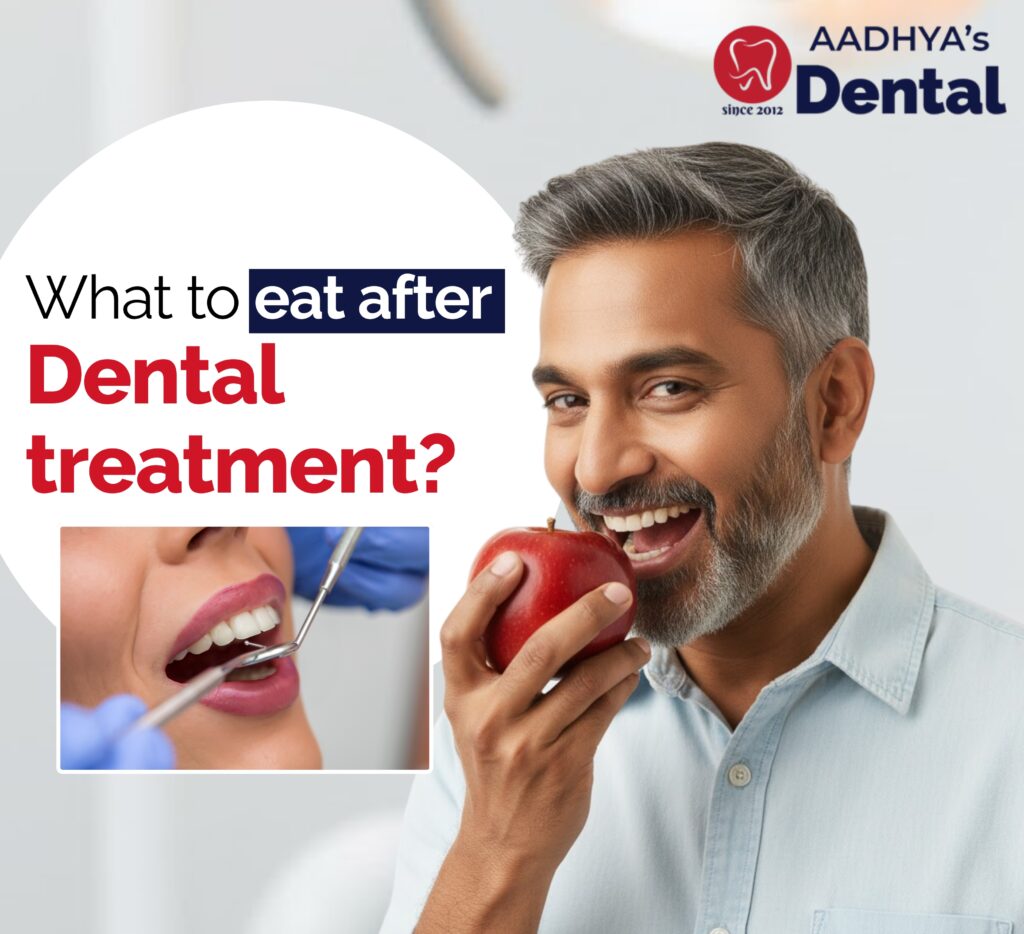
When you leave the dentist’s chair, the last thing you want is a painful reminder that you have just had dental treatment done. The foods you consume in the hours and days following treatment can mean the difference between a smooth, easy recovery and an uncomfortable, lengthy healing process.
The goal of this blog is to explain to our patients and readers why we, as dentists, recommend a soft diet following dental procedures. We also want to make sure they eat the correct foods after their dental procedure.
I am pretty sure that certain questions must have come up in your mind.
- Why should I eat soft foods?
- How long should I follow a liquid diet or soft diet?
- Is it necessary to follow a soft diet after getting dental treatments done?
- Should I follow my dentist’s advice to stay away from hot liquids for a few days?
Knowing which foods to consume and which to avoid will help protect your freshly treated tooth, minimise swelling, and maintain the health of your smile, regardless of whether you have had a simple cleaning, filling, root canal treatment or more involved procedure like a crown or extraction.
The finest choices for a nutrient-rich, mild diet that promotes healing will be discussed in this post-dental eating guide by Dr Mrudula at AADHYA’s Dental, Nallagandla, along with the foods and beverages you should avoid until you are completely recovered.
Let us talk about healthy eating and maintaining oral health following dental procedures.
Also Read : https://aadhyasdental.com/laser-root-canal-treatment/
Anesthesia and eating after dental treatment:
- Your dentist may occasionally administer a local anesthetic injection during your dental appointment.
- This will most likely numb a single tooth, a small region of your jaw, and (in some cases) one side of your face.
- This depends on the type of dental treatment required. Local anaesthesia causes the affected area to become numb for a period of time, which might range from 2-4 hours.
- There is a chance that you could bite your tongue or cheek by accident if you chew hard food from the numb side.
- You will not even be aware of it until the anesthesia wears off.
- Accidental cheek or tongue bites may result in severe ulcers or sores, creating additional suffering following your dental treatment.
- Your dentist will advise you to eat soft foods for the next two days and chew from the side that has not been anesthetized in order to prevent such a situation.
For further information about how to prepare for your first visit to a dental clinic, also read: https://aadhyasdental.com/how-to-prepare-for-your-first-visit-to-a-dental-clinic/
Why soft diet after a minor dental filling or crown?
- Tooth procedures include crown and bridge fixation, tooth fillings, and other procedures have a setting time.
- In other words, within the next 24 hours, the substance used to fill and fix the caps reaches its 100% strength.
- Therefore, a strict soft diet is advised following such procedures.
- Additionally, you might be instructed to avoid drinking water for an hour after treatment.
For further information About, also read : https://aadhyasdental.com/are-crowns-and-bridges-same/
Dental surgeries and soft diet recommendation!
- More care and attention will be needed for surgical operations such periodontal surgery, dental implant placement, and tooth extraction.
- You must limit your diet to soft foods following oral surgery in order to prevent irritating the open wound.
- Following surgery, you can have some jaw discomfort, so it is best to maintain a soft, liquid diet.
- Oral surgeons and dentists typically advise their patients to follow a soft diet for at least 48 hours.
- At AADHYA’s Dental, Dr Mrudula (in-house Periodontal Surgeon) and Dr Krishna Kishore (in-house Oral Surgeon) give personalised instructions orally and in a printed take-home form for better understanding of the instructions, better healing and best possible post-treatment comfort.
- Drinks and beverages that are really hot might irritate exposed sores and gums.
- As a result, you should consume cool, room-temperature food for the first 24 hours before gradually transitioning to lukewarm food.
- Needless to mention, wound healing following any surgical procedure depends on eating a healthy, balanced diet.
- You must therefore be mindful of your diet to encourage a quick recovery.
- In addition to eating food that is neither crunchy nor hard to chew, the objective is to maintain a balanced diet.
Read More :https://aadhyasdental.com/tips-for-avoiding-infection-after-tooth-extraction/
Post-Dental Treatment Eating Guide Suggested By Dr Mrudula
The exact foods depend on what kind of treatment you had (e.g., cleaning, filling, extraction, root canal, etc.), but here’s a general post-dental treatment eating guide — especially suited for Indian diets:
Immediately After Treatment (First 24 hours)
Stick to soft, bland, and cool foods. Avoid chewing on the treated side if applicable.
Good options:
- Dahi (curd) – cooling and soothing
- Curd rice
- Mashed rice mixed with buttermilk
- Plain dal rice
- Soft khichdi – made with moong dal and rice
- Upma or sheera – if soft and not spicy
- Dal soup or clear vegetable soup (lukewarm, not hot)
- Mashed potatoes or boiled sweet potatoes
- Idli (soft, without chutney if spicy)
- Bananas or chiku (sapota) – soft, easy to chew
- Cold milk, lassi, or buttermilk (avoid straws if you had an extraction)
- Milk
Avoid:
- Spicy or oily food
- Hot tea or coffee (can dislodge clots after extraction)
- Crunchy foods like papad, chips, or toast
- Citrus fruits (acidic, may sting)
After 1–3 Days
Once discomfort reduces, you can introduce slightly firmer foods.
Good options:
- Soft roti or chapati dipped in dal or curd
- Soft dosa with chutney
- Sambar rice
- Soft rice with curries that are not too spicy
- Plain rice with dal or curd
- Upma, poha, or sabudana khichdi (mild spice)
- Soft paneer bhurji
- Tofu bhurji
- Soft boiled eggs (if you eat eggs)
- Oats porridge or rava kheer
Still avoid:
- Hard foods (nuts, fried snacks)
- Sticky sweets (jalebi, toffee)
- Alcohol and smoking
After 3–5 Days (or as advised by dentist)
You can gradually resume your normal diet after the first few days of your dental treatment, including foods that are crunchy and firm. It is important to realize that each situation is unique when it comes to what to eat and how long to follow a particular diet.
Conclusion
This blog is intended to serve as a reference, not a strict regulation. You can always ask your dentist for detailed instructions to learn more or you can call us or text us on our whatsapp number 7396235802 to directly speak with our dentists Dr Mrudula and Dr Krishna Kishore.
Website: https://aadhyasdental.com/
Address: Aadhya’s Dental | Best Dental Clinic in Nallagandla
Phone: +91-73962 35802