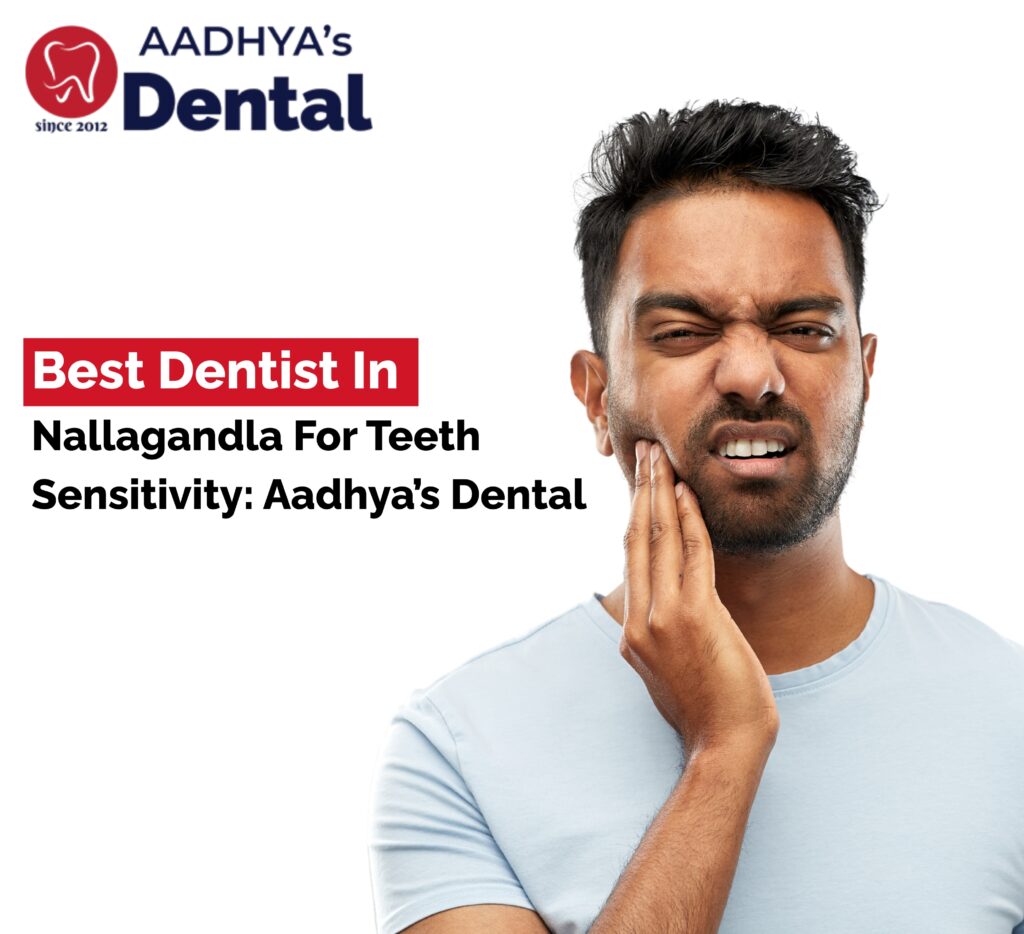
Do you experience a sharp pain when eating ice cream or sipping hot tea? Teeth sensitivity is a common problem—but with the right care, you can protect your smile and reduce discomfort.
At Aadhya’s Dental, Nallagandla, we help patients understand what causes sensitivity and how to manage it with simple daily habits and professional dental treatments.
Key Takeaways
- Tooth sensitivity often comes from enamel erosion, receding gums, cavities, or cracked teeth.
- Gentle oral care habits, like using a soft-bristled toothbrush and fluoride toothpaste, help protect your enamel.
For further information about Why and Where to replace your toothbrush Also Read : https://aadhyasdental.com/why-and-when-to-replace-your-toothbrush/
- Your diet, home remedies, and timely dental treatments all play a role in managing and preventing sensitivity.
For further information About, also read : https://aadhyasdental.com/why-should-you-visit-your-dentist-every-six-months/
What Is Tooth Sensitivity?
Tooth sensitivity—or dentin hypersensitivity—happens when the protective enamel layer becomes thin or when gums recede, exposing the dentin underneath. This allows heat, cold, and sweets to reach the nerve, causing sharp pain.
Common causes include:
- Enamel erosion from aggressive brushing, acidic foods, or nighttime grinding
- Gum recession that exposes the tooth root
- Cavities
- Cracked or damaged teeth
- Old or failing dental fillings
Identifying the cause is the first step toward long-term relief. At Aadhya’s Dental, we help diagnose the exact reason for your sensitivity and provide personalised solutions.
Causes of Tooth Sensitivity
Tooth sensitivity can arise due to various dental factors. Understanding the cause is crucial for effective treatment. Common causes include:
1. Enamel Erosion
Enamel is the protective outer layer of your teeth. Over time, it can wear away due to:
- Acidic foods and beverages (like citrus fruits or soda)
- Aggressive brushing habits
Enamel erosion exposes the underlying dentin, which contains microscopic tubules connected to nerves, leading to sensitivity.
2. Gum Recession
When gums recede, the tooth roots are exposed. Unlike enamel-covered crowns, roots are covered by cementum, which is softer and more susceptible to sensitivity. Gum recession can occur due to periodontal disease, ageing, or aggressive brushing.
3. Tooth Decay
Cavities close to the tooth nerve can trigger sharp or lingering pain. Untreated decay may worsen sensitivity and eventually lead to infection.
4. Tooth Grinding (Bruxism)
Grinding or clenching your teeth wears down enamel, exposing dentin and making teeth more sensitive to temperature and pressure.
5. Dental Procedures
Some dental treatments, such as teeth whitening, professional cleaning, or fillings, can cause temporary sensitivity. This usually resolves within a few days or weeks.
Symptoms of Tooth Sensitivity
Tooth sensitivity can vary from mild discomfort to sharp pain. Common signs include:
- Pain when consuming hot, cold, sweet, or acidic foods and beverages
- Discomfort when breathing in cold air
- Pain while brushing or flossing
- Sensitivity when biting or applying pressure to the tooth
If sensitivity persists, it is important to consult a dentist to rule out underlying problems like cavities or gum disease.
For further information about how to prepare for your first visit to a dental clinic Also Read : https://aadhyasdental.com/how-to-prepare-for-your-first-visit-to-a-dental-clinic/
Gentle Oral Care for Sensitive Teeth
If you have sensitivity, your daily brushing routine matters more than you think.
Use a Soft-Bristled Toothbrush
Hard bristles can wear down enamel and irritate gums. Soft bristles clean effectively while protecting sensitive areas.
Also Read : https://aadhyasdental.com/electric-vs-manual-toothbrushes-a-comparison-of-pros-and-cons/
Try a Fluoride Toothpaste
Fluoride strengthens weakened enamel and reduces sensitivity over time.
Brush Gently
Use small, circular strokes rather than scrubbing harshly. This prevents further enamel wear and gum recession.
Consistency is key—proper brushing every day helps maintain healthier, pain-free teeth.
More Info: https://aadhyasdental.com/are-you-brushing-the-right-way/
Why Desensitising Toothpaste Helps
Desensitising toothpaste is one of the easiest and most effective ways to reduce sensitivity at home.
These toothpastes contain:
- Potassium nitrate – blocks pain signals from the nerves
- Stannous fluoride – shields exposed dentin
- Strontium chloride – helps block the tiny tubules that lead to nerves
For best results:
- Use twice a day
- Do not rinse immediately after brushing
- Give it 2–4 weeks for noticeable improvement
At Aadhya’s Dental, we can recommend the best sensitivity toothpaste for your specific needs.
How Diet Affects Tooth Sensitivity
What you eat directly affects your enamel.
Avoid or Reduce:
- Acidic foods (citrus, tomatoes, pickles)
- Sugary snacks
- Carbonated drinks
- Hot beverages with added sugar
These foods weaken enamel, making teeth more reactive to temperature changes.
Choose a Tooth-Friendly Diet:
- Dairy products
- Leafy greens
- Nuts
- Plenty of water
A balanced diet keeps your enamel strong and reduces irritation.
Read Info: https://aadhyasdental.com/what-to-eat-after-dental-treatment/
Home Remedies for Sensitive Teeth
While not a replacement for dental care, these natural methods can provide temporary relief:
- Hydrogen peroxide rinse — mix 1 part 3% peroxide with 2 parts warm water
- Saltwater rinse — reduces inflammation and cleans the mouth
- Coconut oil pulling — moisturises gums and reduces bacteria
- Vanilla extract — offers mild numbing relief
- Green tea — anti-inflammatory and soothing
If home remedies don’t help, it’s time to consult your best dentist in Nallagandla.
Professional Fluoride Treatments
Professional fluoride varnish or gel treatments can significantly reduce sensitivity. At Aadhya’s Dental, we apply fluoride directly to sensitive areas to:
- Strengthen enamel
- Reduce discomfort
- Protect exposed dentin
These treatments are quick, safe, and especially helpful for patients with ongoing sensitivity.
When Dental Procedures Are Needed
If sensitivity persists for weeks, there may be an underlying issue such as:
- Advanced enamel erosion
- Deep cavities
- Cracked teeth
- Significant gum recession
Possible treatments include:
Covers exposed roots and protects sensitive surfaces.
Seals areas of enamel loss or cracks.
Recommended only when sensitivity is caused by nerve irritation or deep infection.
Ignoring persistent sensitivity can lead to serious problems—early intervention is always best.
Preventing Further Damage
You can protect sensitive teeth by:
- Wearing a night guard if you grind your teeth
- Managing stress to reduce clenching
- Brushing twice daily and flossing
- Avoiding overuse of whitening products
- Using fluoride mouthwash
Simple habits go a long way toward protecting your smile.
The Importance of Regular Dental Check-Ups
Regular visits to your dentist help catch problems early and prevent sensitivity from worsening.
At Aadhya’s Dental, Nallagandla, our team provides gentle cleanings and thorough exams tailored for patients with sensitive teeth.
If hot or cold foods cause pain, don’t ignore it—it’s your body telling you something is wrong.
More Info: https://aadhyasdental.com/why-should-you-visit-your-dentist-every-six-months/
Summary
Caring for sensitive teeth includes:
- Gentle brushing and proper oral hygiene
- Choosing the right toothpaste
- Being mindful of diet
- Using home remedies safely
- Getting professional treatments when needed
With the right steps, you can protect your enamel, reduce sensitivity, and enjoy a pain-free smile.
Also Read : https://aadhyasdental.com/what-to-eat-after-dental-treatment/
Frequently Asked Questions
1. What causes tooth sensitivity?
Enamel erosion, gum recession, cavities, and cracked teeth are the most common causes.
2. How can I reduce sensitivity at home?
Use desensitising products, hydrogen peroxide rinses, saltwater rinses, and coconut oil pulling for temporary relief.
3. What foods should I avoid?
Acidic, sugary, and very hot or cold foods can worsen sensitivity.
4. When should I see a dentist?
If your sensitivity is persistent, sharp, or worsening, schedule a dental check-up immediately.
More Info: https://aadhyasdental.com/choosing-the-perfect-time-for-your-dental-visit/
5. Are regular dental visits important?
Yes—routine dental care prevents enamel loss, gum issues, and deeper problems that cause sensitivity.
Conclusion
If you’re struggling with tooth sensitivity and looking for reliable, long-term relief, Aadhya’s Dental in Nallagandla is the right choice. With accurate diagnosis, advanced treatments, and a gentle, patient-first approach, the clinic focuses on treating the root cause—not just the symptoms. From preventive care to customized sensitivity solutions, Aadhya’s Dental ensures comfort, safety, and lasting results. Trust their experienced dental team to help you enjoy pain-free eating, drinking, and smiling again with complete confidence.
Book Your Appointment Today!
Website:https://aadhyasdental.com/
Address: Aadhya’s Dental | Best Dental Clinic in Nallagandla
Phone: +91-73962 35802