
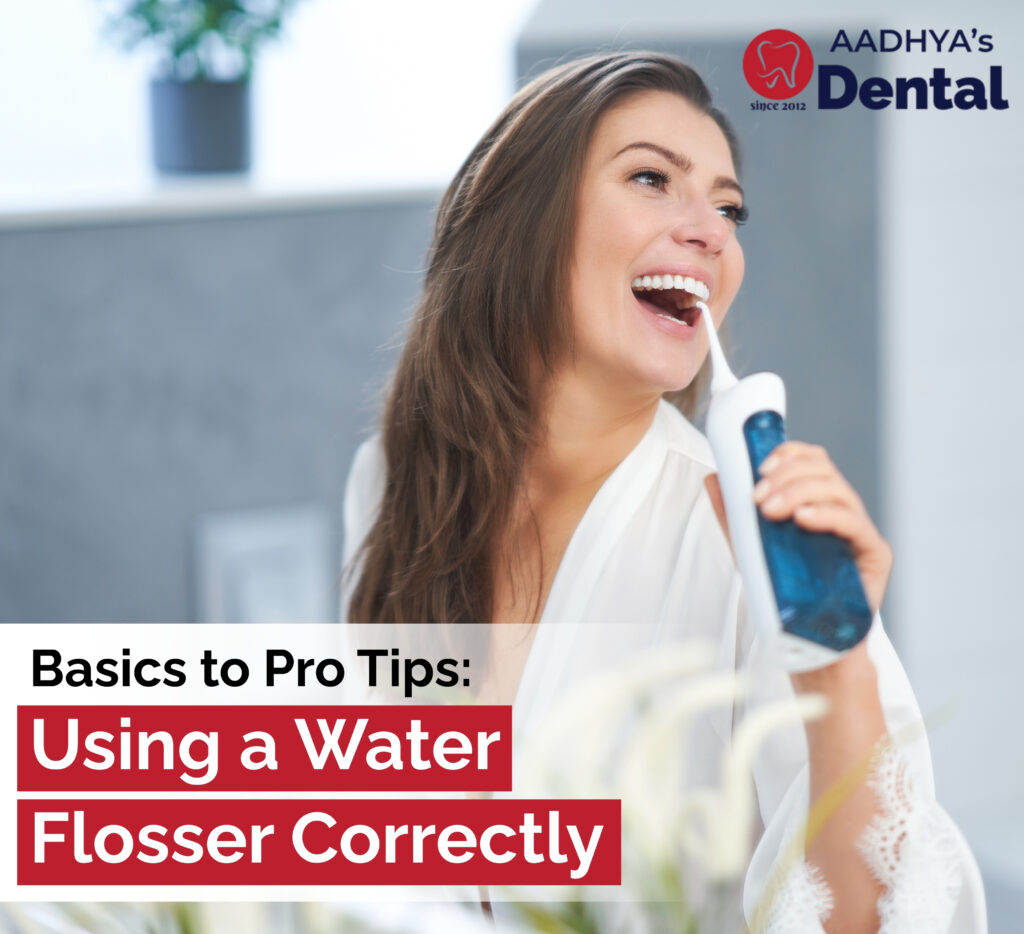
If you’re looking to improve your oral hygiene routine effortlessly, a water flosser or an oral irrigator may be your new favourite tool. Whether you’re a beginner or want to master professional-level techniques, this complete guide covers everything you need—from the basics to advanced tips—to help you use a water flosser correctly and effectively.
For further information about choosing the perfect time for your dental visit, also read: https://aadhyasdental.com/choosing-the-perfect-time-for-your-dental-visit/
Water flossers are especially helpful for people with braces, implants, gum sensitivity, or anyone who finds traditional string floss uncomfortable. Let’s break down exactly how to get the best results.
Also Read : https://aadhyasdental.com/dental-implants-permanent-tooth-replacement-benefits-aadhya-dental/
What Is a Water Flosser?
A water flosser (also known as an oral irrigator) is a device that uses a pressurized stream of water to clean between your teeth and along the gumline. Instead of physically scraping plaque with floss, a water flosser “washes” debris and bacteria away.
Also Read : https://aadhyasdental.com/what-is-plaque-and-why-is-it-important-to-remove-it/
Key Components of a Water Flosser
- Water reservoir – Holds the water used during cleaning
- Motor and pump – Pressurize the water
- Flossing tip/nozzle – Directs the water stream
- Pressure settings – Allow you to adjust intensity
Most popular water flosser brands include Waterpik, Philips Sonicare AirFloss, and various cordless travel-friendly models.
Why Using a Water Flosser Matters
- Improves gum health
- Reduces bleeding and inflammation
- Helps clean around braces and dental work
- Easier and more comfortable than string floss
- Boosts overall oral hygiene
For further information about 11 Signs your child might need braces Also Read : https://aadhyasdental.com/11-signs-your-child-might-need-braces/
Benefits of Using a Water Flosser
Gentle on gums
People with sensitive gums or gum disease often prefer water flossers because they’re less abrasive than string floss.
Great for braces and dental work
Water can easily move around brackets, wires, crowns, and implants where traditional floss may struggle.
Also Read: https://aadhyasdental.com/faq-about-dental-cavities-and-fillings/
Helps reduce plaque and bleeding
Studies consistently show that water flossers can reduce gum bleeding and inflammation when used regularly.
Easy to use
Many people find water flossing more comfortable and quicker than string flossing.
BASICS: How to Use a Water Flosser Correctly
1. Fill the Water Reservoir
Use warm water for comfort and reduced sensitivity. Warm water also makes the pressurized stream feel gentler.
2. Select the Right Flossing Tip
Choose the attachment that best fits your dental needs:
- Classic tip – everyday use
- Orthodontic tip – braces and retainers
- Periodontal tip – deep gum pockets
- Plaque seeker tip – implants, crowns, bridges
Secure it firmly before starting.
3. Begin with a Low Pressure Setting
If you’re new to water flossing, start low. Increase gradually as your gums adjust.
4. Lean Over the Sink
This minimizes splash and keeps water where it should be.
5. Place the Tip in Your Mouth Before Turning It On
This simple step prevents accidental sprays and messes.
6. Aim at a 90° Angle to the Gumline
Move slowly along your gumline, pausing slightly between teeth.
Use a consistent pattern, such as:
- Lower teeth → upper teeth
- Back teeth → front teeth
Also Read : https://aadhyasdental.com/myths-about-gum-disease/
7. Empty and Rinse the Tank After Use
A clean reservoir prevents bacteria growth and keeps your device functioning properly.
INTERMEDIATE TIPS: Improve Your Water Flossing Routine
1. Add Mouthwash (If Compatible with Your Device)
A small amount of alcohol-free mouthwash helps freshen breath and increases antibacterial power.
2. Water Floss Before Brushing
Flossing first loosens debris so your toothbrush can clean more thoroughly.
For More Info: https://aadhyasdental.com/electric-vs-manual-toothbrushes-a-comparison-of-pros-and-cons/
3. Make It a Daily Habit
Consistency is key for gum health and plaque control.
4. Pause 2–3 Seconds Between Teeth
This technique flushes out bacteria hidden in gum pockets.
5. Breathe Through Your Nose
It helps you relax and prevents swallowing water.
PRO TIPS: Mastering Water Flossing Like a Dentist
1. Angle Slightly Under the Gumline
A gentle upward angle gives you access to deeper gum pockets and hidden plaque.
For further information about Faq About Gum Health Also Read More : https://aadhyasdental.com/faq-about-gum-health/
2. Use a Pulse, Sweep & Pause Motion
This is especially effective around:
- Wisdom tooth gums
- Brackets and wires
- Bridges and crowns
- Tight tooth spaces
For More Info: https://aadhyasdental.com/tips-for-avoiding-infection-after-tooth-extraction/
3. Switch to Specialized Tips When Needed
Using the right tip dramatically improves cleaning efficiency.
Also Read : https://aadhyasdental.com/are-you-brushing-the-right-way/
4. Increase Pressure Slowly Over Time
Your gums will strengthen without unnecessary irritation.
5. Use Warm Salt Water for Healing
If your gums are sore or you’ve recently had dental work, warm salt water promotes healing.
6. Keep Your Device Clean
Replace tips every 3–6 months and disinfect weekly.
7. Combine Water Flossing With Traditional Floss (Optional)
For the cleanest possible results, follow this routine:
Water floss → Brush → String floss
Tips for Best Results
- Use your water flosser once per day, ideally before brushing.
- Clean the tip regularly and replace it every 3–6 months.
- Add mouthwash to the water (if allowed by your device) for a fresh, antibacterial boost.
- If you have gum sensitivity, start with gentle pressure and increase over time.
Also Read : https://aadhyasdental.com/why-should-you-visit-your-dentist-every-six-months/
Is a Water Flosser Better Than String Floss?
It depends on your needs. Water flossers are highly effective and particularly beneficial for:
- People with braces, implants, or bridges
- Anyone who finds string floss uncomfortable
- Those struggling with gum disease or inflammation
However, string floss can still be better at physically scraping away sticky plaque. Ideally, you should use both—but a water flosser alone is still much better than not flossing at all.
Common Water Flossing Mistakes to Avoid
- Using water that’s too cold
- Turning the device on before it’s in your mouth
- Skipping your molars
- Rushing the process (good flossing takes 1–2 minutes)
- Starting with maximum pressure
- Forgetting to clean the reservoir and tips
Conclusion
A water flosser is one of the easiest and most effective ways to improve your gum health and overall oral hygiene. By mastering both the basics and pro techniques, you’ll enjoy fresher breath, cleaner teeth, and healthier gums in just a few minutes a day.
Whether you’re new to water flossers or looking to upgrade your routine, the tips in this guide will help you get the best possible results.
For further information about how to prepare for your first visit to a dental clinic Also Read : https://aadhyasdental.com/how-to-prepare-for-your-first-visit-to-a-dental-clinic/
Website: https://aadhyasdental.com/
Address: Aadhya’s Dental | Best Dental Clinic in Nallagandla
Phone: +91-73962 35802