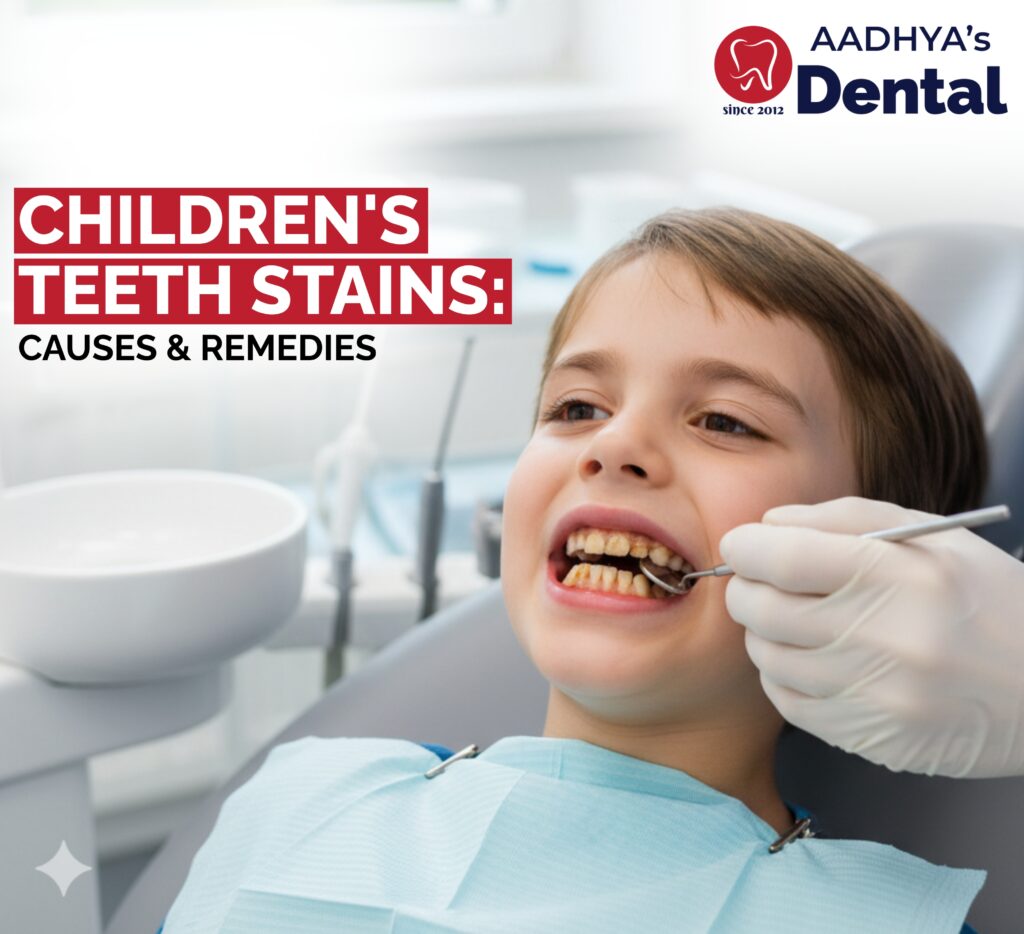
It can be worrying for parents to find stains on kids’ teeth. There are numerous causes of staining, and not all of them are related to cavities or inadequate brushing. Foods and beverages can create some stains, while minerals, drugs, or even bacteria in the mouth can cause others.
Being aware of the origins of stains enables you to handle them appropriately. This article describes the typical reasons for tooth discoloration in kids and the available treatments to maintain a healthy and clean smile.
Comparing Extrinsic and Intrinsic Stains
There are two types of stain teeth:
- Extrinsic
- Intrinsic
Knowing the difference might help you determine the cause of the discoloration and the most effective treatment.
The teeth’s surface is where extrinsic stains are found. These typically originate from meals or beverages the child consumes, such as tea, curry, or foods with vibrant colours. Surface stains can also result from chlorine in swimming pools and iron supplements. Regular brushing or a professional cleaning at the dentist can often get rid of them.
The source of intrinsic stains is within the tooth. These could arise as a result of trauma, certain drugs, or illnesses that alter the formation of enamel. Tetracycline medicines taken by the mother during pregnancy, for instance, may cause the child’s teeth to appear dark or grey. Because they do not go away with brushing or cleaning, intrinsic stains frequently require more involved procedures like bonding or crowns.
Extrinsic Causes of Tooth Staining
Your child’s teeth may have extrinsic stains, which are frequently caused by food, beverages, or objects they come into daily contact with. These stains typically do not harm the tooth structure and are simpler to get rid of. They can usually be treated at home or with a dentist’s help.
Knowing if the discoloration is on the inside or outside of the tooth will help you decide what to do next.
1. Dietary choices
Certain meals and beverages have the potential to discolour teeth. Strong pigments found in curry and turmeric can cause tooth discoloration in kids. Tea has natural chemicals in the leaves that can discolour teeth, depending on how often it is consumed.
Treatment
Regular brushing usually removes these kinds of stains. If not, they can be safely removed without damaging the teeth during a dental cleaning.
2. Bacteria that are Chromogenic
Dark-coloured waste that adheres to teeth can be produced by specific oral bacteria. This is known as chromogenic black staining in children, and it often manifests as black or orange stains near the gum line.
Treatment
Usually, brushing is not enough to remove these stains. They can be eliminated with a professional dental cleaning. Brushing and flossing on a regular basis can help stop the bacteria from returning.
3. Swimming in Pools with Chlorine
The chlorine in swimming pools might occasionally give your child’s teeth a greenish colour if they spend a lot of time in them. Regular swimmers are more likely to experience this.
Treatment
Usually, a dental cleaning removes these surface stains. Rinsing your child’s mouth with fresh water after swimming can help minimize discoloration, but you do not have to stop them from swimming.
4. Supplemental Iron
Baby teeth may get reddish stains from taking liquid iron supplements. Children who take iron to correct low iron levels frequently experience these.
Treatment
Despite their unpleasant appearance, these stains on kids teeth only affect the tooth’s surface. They can be removed by a dentist during a regular cleaning.
You may assist your child in maintaining a clean and healthy smile by identifying the source of surface stains early on. The next step if brushing does not remove stains is to see a dentist.
Intrinsic Causes of Tooth Stains
Originating from within the tooth, intrinsic stains frequently appear in the early phases of tooth development. Usually, brushing and routine cleanings are ineffective at removing these stains. In contrast to surface stains, they frequently require dental care to make the teeth seem better.
1. Trauma
A baby tooth’s internal blood vessels may be harmed by an injury, which could cause the tooth to darken. Even if the tooth does not seem loose or painful, this might occur following a fall or oral trauma.
Treatment
Your dentist can advise leaving the tooth alone and keeping an eye out for any changes if it is not infected or uncomfortable. Cosmetic procedures like bonding may improve appearance in some situations. The dentist might have to treat or extract the tooth if there is nerve damage or indications of infection.
2. Antibiotics
The development of a child’s baby teeth may be impacted by exposure to specific antibiotics during pregnancy.
It is well known that taking the antibiotic tetracycline when pregnant or in early childhood might result in grey or brown discoloration.
Treatment
Depending on the child’s age and the extent of the staining, dentists can use cosmetic procedures like bonding, veneers, or crowns to improve appearance even though these stains are permanent.
3. Genetic Conditions
Some children have birth defects that impact the formation of their enamel.
One condition where the enamel is weak, thin, or absent is amelogenesis imperfecta. This increases the likelihood that teeth will discolor and appear yellow or brown.
Treatment
Amelogenesis imperfecta typically necessitates continuous care and cannot be completely healed. To treat the problem and assist maintain the teeth’s strength and comfort over time, dentists frequently employ fluoride treatments, special toothpaste, and protective coverings like crowns.
When it comes to Tooth Stains, Aadhya’s Dental Can Help
Our staff at Aadhya’s Dental can help you if you have observed stains on your child’s teeth and are unsure of the cause. We will assess your child’s teeth, describe the condition, and suggest the best course of action for treating or managing the discoloration.
As a child friendly dentist, Dr Mrudula and Dr Krishna Kishore at AADHYA’s Dental ensure that every child feels comfortable and cared for during their dental visits. We are here to carefully and clearly walk you through it, whether it is something straightforward or requires more attention.
Although intrinsic stains cannot be removed by brushing, your child’s dentist can offer safe and efficient solutions. Scheduling a checkup will help guide the course of action if you observe dark or odd colouring that persists.
Conclusion
Tooth discoloration in kids can be caused by a variety of factors ranging from dietary habits and bacterial buildup to genetic conditions and trauma. While extrinsic stains are often manageable with professional cleaning and preventive care, intrinsic stains may require more advanced treatments. If you notice stains on kids teeth, do not ignore them, as they could indicate underlying dental concerns.
At Aadhya’s Dental, we provide expert diagnosis and treatment options for everything from chromogenic black staining in children to more complex intrinsic discoloration. With the right care from a child friendly dentist like Dr Mrudula and Dr Krishna Kishore at AADHYA’s Dental, your child’s smile can remain healthy, bright, and confident.
Book Your Appointment Today!
Website: https://aadhyasdental.com/
Address: Aadhya’s Dental | Best Dental Clinic in Nallagandla
Phone: +91-73962 35802