A beautiful, confident smile is something everyone deserves, regardless of age. Many people believe that orthodontic treatment is only suitable for teenagers and young adults. However, this is a common misconception. If you are in your 30s, 40s, or even older, you can still straighten your teeth and improve your smile with the right orthodontic care.
Adult orthodontic treatment has become increasingly popular because more people understand the importance of healthy teeth, proper alignment, and oral hygiene. Whether you have crooked teeth, gaps, overcrowding, or bite problems, modern orthodontic solutions can help improve your smile at almost any age.
At Aadhya Dental Clinic, Dr. Mrudula and Dr. P. Krishna Kishore provide dental care focused on improving oral health and smile appearance. With proper examination and an individual treatment plan, adults can explore suitable options for achieving straighter teeth.
So, is it too late to straighten your teeth after 30 or 40? The answer is no. Let’s understand how adult orthodontic treatment works and what options are available.
1. Is It Too Late to Straighten Your Teeth After 30 or 40?
No, it is never too late to consider orthodontic treatment. Teeth can be moved at almost any age as long as the surrounding gums, bone, and supporting structures are healthy.
Unlike children and teenagers, adults have fully developed jawbones. This means their orthodontic treatment may require careful planning and monitoring. However, modern orthodontic techniques make it possible for adults to correct different alignment and bite concerns.
Many adults choose teeth straightening after 30 because they want to:
- Improve the appearance of crooked or crowded teeth.
- Close unwanted gaps between teeth.
- Correct bite alignment problems.
- Make brushing and flossing easier.
- Improve confidence when smiling.
- Support better long-term oral hygiene.
Age alone is not a barrier to orthodontic treatment. Your overall dental health is more important when deciding whether treatment is suitable.
2. Why Do Adults Consider Orthodontic Treatment?
There are several reasons why people decide to straighten their teeth later in life. Some adults have had alignment problems since childhood but never received treatment. Others notice changes in their teeth as they get older.
Here are some common reasons adults seek orthodontic care.
Crooked or Misaligned Teeth
Crooked teeth can affect the appearance of your smile and make cleaning difficult. Food particles may become trapped between overlapping teeth, increasing the risk of plaque buildup and gum problems.
Orthodontic treatment helps gradually move teeth into better positions.
Gaps Between Teeth
Spaces between teeth, also known as diastema, can affect smile appearance. Depending on the size and cause of the gaps, orthodontic treatment may help bring the teeth closer together.
Overcrowded Teeth
When there is not enough space in the jaw, teeth may overlap or twist. Overcrowding can make brushing and flossing challenging and may increase the risk of dental problems.
Bite Problems
Some adults experience overbite, underbite, crossbite, or open bite. These conditions can affect how the upper and lower teeth meet.
Correcting bite problems can improve chewing function and help distribute pressure more evenly across the teeth.
Teeth Shifting With Age
Even if you had straight teeth during your younger years, they can gradually move over time. Changes in gum health, missing teeth, and not wearing retainers after previous orthodontic treatment can contribute to shifting.
3. What Are the Different Orthodontic Treatment Options for Adults?
Today, adults have access to several orthodontic options. The most suitable choice depends on your dental condition, treatment goals, lifestyle, and budget.
Traditional Metal Braces
Traditional metal braces are one of the most commonly used orthodontic solutions. They consist of metal brackets attached to the teeth and connected with wires that apply controlled pressure to move teeth gradually.
Benefits of metal braces:
- Suitable for many alignment problems.
- Can correct complex tooth movements.
- Provide continuous orthodontic pressure.
- Usually do not need to be removed during meals.
Metal braces are a reliable option for adults who want to correct significant crowding or bite issues.
Ceramic Braces
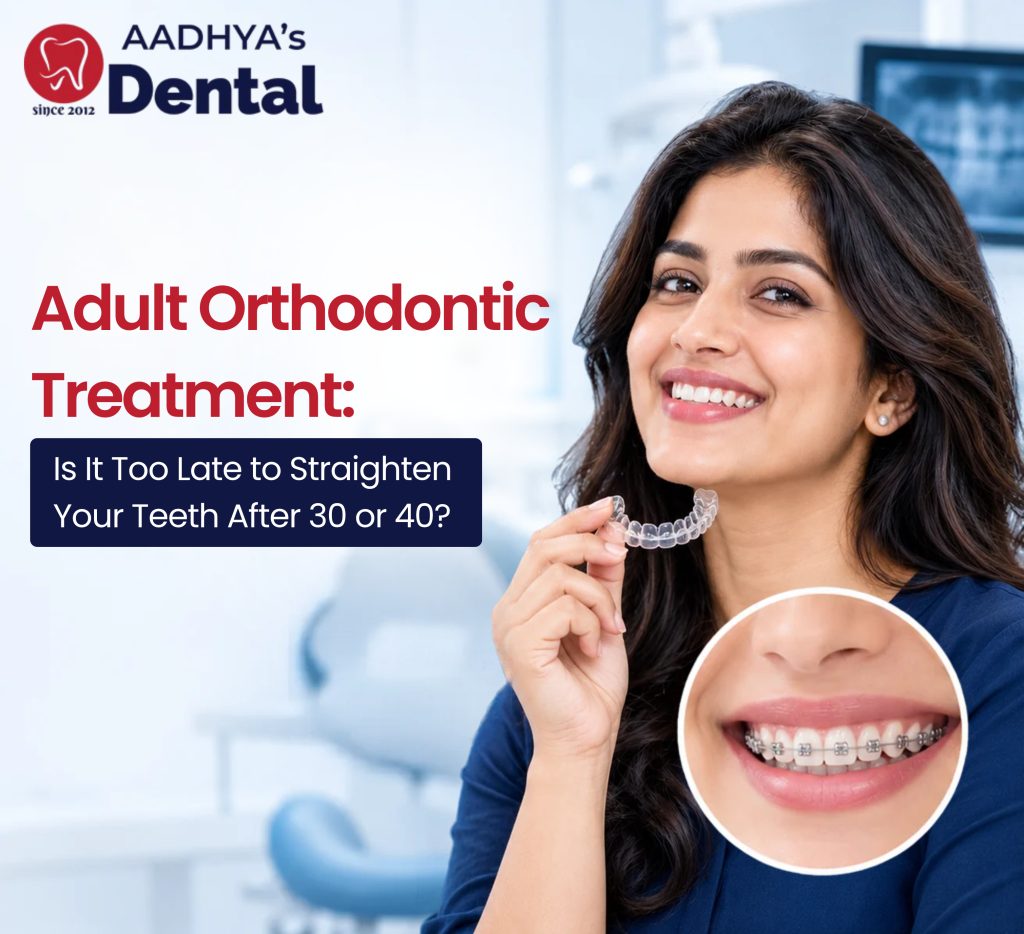
Ceramic braces work similarly to traditional metal braces but use tooth-coloured or clear brackets. They are less noticeable, making them a popular choice among working professionals and adults who prefer a more discreet appearance.
Benefits of ceramic braces:
- Less noticeable than metal braces.
- Suitable for many orthodontic concerns.
- Work using a similar mechanism to traditional braces.
- Provide an aesthetic alternative for adults.
However, ceramic brackets may require additional care because they can stain or become damaged if not maintained properly.
Clear Aligners
Clear aligners are transparent, removable trays designed to gradually move teeth into the desired position. They are becoming increasingly popular among adults because they offer a discreet alternative to traditional braces.
Patients generally wear each set of aligners for a recommended period before progressing to the next set.
Benefits of clear aligners:
- Nearly invisible appearance.
- Removable while eating and drinking.
- Easier brushing and flossing.
- Comfortable for many adult patients.
- Convenient for professional and social activities.
For effective results, clear aligners generally need to be worn around 20–22 hours per day, as advised by the orthodontic provider.
Not every orthodontic condition can be treated with aligners alone. A dental assessment is necessary to determine suitability.
4. How Long Does Adult Orthodontic Treatment Take?
One common question adults ask is how long it takes to straighten teeth after 30 or 40.
The treatment duration depends on several factors, including:
- Severity of tooth misalignment.
- Amount of crowding or spacing.
- Type of bite problem.
- Selected orthodontic treatment.
- Patient compliance and oral health.
- Individual response to tooth movement.
In many cases, orthodontic treatment takes approximately 12–24 months. Some minor alignment problems may require less time, while complex cases may take longer.
Regular dental appointments are important to monitor progress and make necessary adjustments.
Following your dentist’s instructions and attending scheduled visits can help keep treatment on track.
5. Are Braces or Aligners Safe for Adults Over 40?
Yes, adults over 40 can undergo orthodontic treatment if their teeth and supporting structures are healthy enough.
However, adults may have existing dental concerns that need attention before starting treatment.
These may include:
- Gum disease or periodontal problems.
- Tooth decay and cavities.
- Missing teeth.
- Worn-down teeth.
- Previous dental restorations.
- Bone loss around the teeth.
A complete dental examination helps identify these concerns before orthodontic treatment begins.
At Aadhya Dental Clinic, Dr. Mrudula and Dr. P. Krishna Kishore can assess your dental condition and help you understand the available treatment options based on your oral health needs.
Healthy gums and proper dental care are essential for successful orthodontic treatment at any age.
6. What Are the Benefits of Straightening Your Teeth as an Adult?
Orthodontic treatment is not only about improving the appearance of your smile. Properly aligned teeth can also support better oral health and everyday comfort.
Better Oral Hygiene
Straight teeth are generally easier to clean because there are fewer overlapping areas where food particles and plaque can collect.
Improved Bite Alignment
Correcting bite problems can help improve how your upper and lower teeth come together when chewing.
Increased Self-Confidence
Many adults feel uncomfortable smiling because of crooked teeth or noticeable gaps. Improving tooth alignment can help them feel more confident in personal and professional situations.
Reduced Uneven Tooth Wear
When teeth do not meet properly, certain teeth may experience additional pressure. Correcting bite alignment can help distribute biting forces more evenly.
Long-Term Smile Maintenance
With appropriate treatment and regular dental checkups, adults can maintain better tooth alignment and oral health.
7. What Should Adults Know Before Starting Orthodontic Treatment?
Before choosing braces or clear aligners, it is important to understand your dental condition and treatment requirements.
Here are a few things to consider:
1. Get a Complete Dental Checkup
Your dentist should examine your teeth, gums, bite, and supporting bone before recommending orthodontic treatment.
2. Treat Existing Dental Problems
If you have cavities, gum infections, or other dental concerns, they may need to be treated before starting orthodontics.
3. Choose the Right Treatment Option
Not every adult is suitable for every orthodontic option. Your dentist can recommend braces or clear aligners depending on your alignment concerns.
4. Maintain Proper Oral Hygiene
Brushing twice daily, flossing, and following your dentist’s cleaning instructions are important throughout treatment.
5. Attend Regular Follow-Up Appointments
Regular visits help monitor tooth movement and identify any problems early.
6. Wear Retainers After Treatment
Once orthodontic treatment is completed, retainers help maintain the new tooth positions. Without proper retention, teeth can gradually shift back.
8. Why Choose Aadhya Dental Clinic for Adult Orthodontic Treatment?
Choosing the right dental clinic is an important step towards achieving a healthier and more confident smile.
Aadhya Dental Clinic focuses on understanding each patient’s dental concerns and recommending suitable treatment options.
Dr. Mrudula and Dr. P. Krishna Kishore help patients understand their orthodontic needs and the available options for improving tooth alignment.
Whether you are concerned about crooked teeth, overcrowding, gaps, or bite alignment, a professional dental consultation can help you understand the next steps.
At Aadhya Dental Clinic, adult patients can discuss their smile goals, understand the expected treatment process, and receive guidance on maintaining oral health throughout orthodontic care.
If you have been postponing braces because you think you are too old, now is a good time to explore your options.
Final Thoughts
It is never too late to work towards a healthier and more confident smile. Whether you are 30, 40, or above, adult orthodontic treatment can help correct crooked teeth, close gaps, improve bite alignment, and support better oral hygiene.
Modern options such as metal braces, ceramic braces, and clear aligners make teeth straightening after 30 more convenient and accessible.
The most important step is to understand your dental condition and choose the right treatment with professional guidance.
At Aadhya Dental Clinic, Dr. Mrudula and Dr. P. Krishna Kishore can help you explore suitable orthodontic options based on your individual dental needs.
Don’t let age stop you from achieving the smile you have always wanted. Schedule a dental consultation and take the first step towards straighter teeth
Frequently Asked Questions
1. Is 40 too old to get braces?
No, 40 is not too old to get braces. Adults can undergo orthodontic treatment at almost any age if their teeth, gums, and supporting bone are healthy.
2. How long does it take to straighten teeth after 30?
Most adult orthodontic treatments take approximately 12–24 months. However, the duration depends on tooth alignment, bite problems, and the treatment method selected.
3. Are clear aligners better than braces for adults?
Clear aligners offer a discreet and removable option, while braces can treat a wide range of orthodontic problems. The best option depends on your dental condition and treatment goals.
4. Can adults with gum problems get orthodontic treatment?
Adults with gum problems may need periodontal treatment before starting orthodontics. Healthy gums are important for safe tooth movement and successful results.
5. Will my teeth become crooked again after orthodontic treatment?
Teeth can gradually shift after treatment if retainers are not worn as recommended. Wearing retainers and attending regular dental checkups help maintain your results.