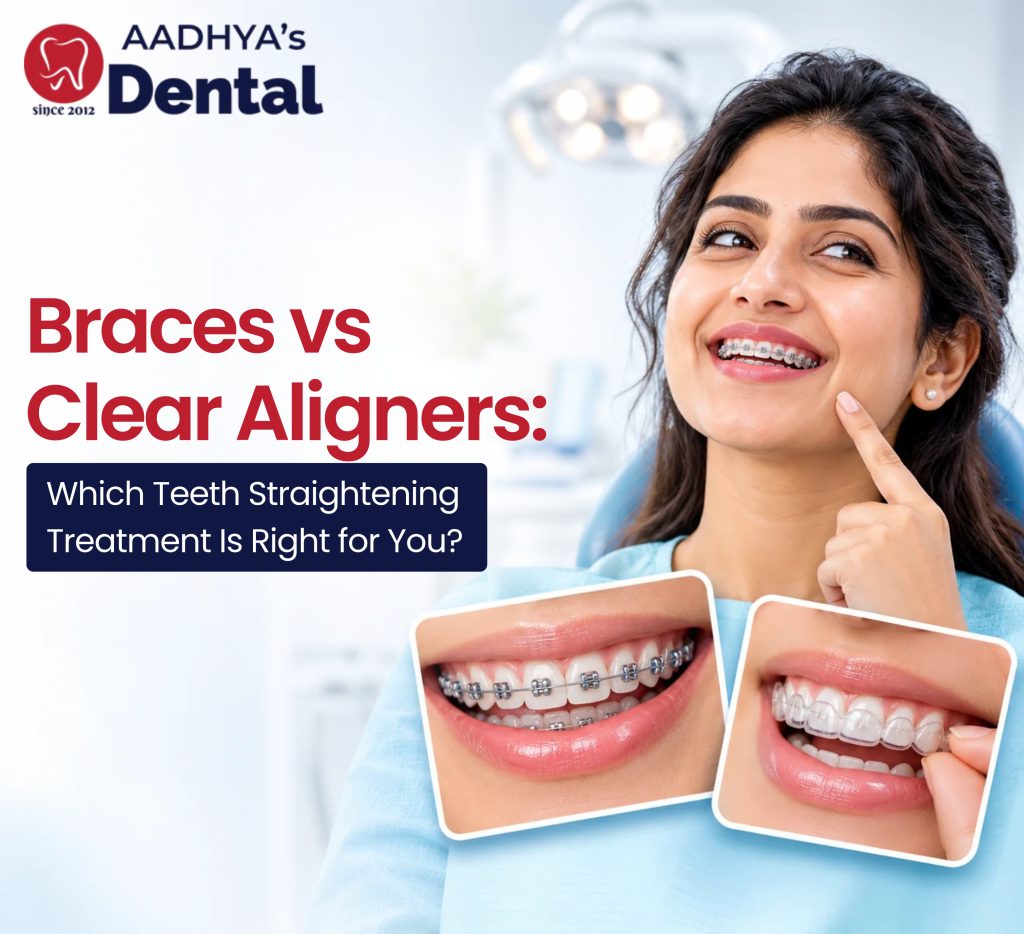
Braces vs Clear Aligners: Which Teeth Straightening Treatment Is Right for You?
Having straight teeth can improve your smile, confidence, and overall dental health. However, many people experience dental alignment problems such as crooked teeth, gaps, overcrowding, and bite issues. Modern dentistry offers different options to correct these concerns, including traditional braces and clear aligners.
When considering teeth straightening treatment in Nallagandla, one common question patients ask is whether braces or clear aligners are the better choice. Both treatments help move teeth into their proper positions, but they differ in appearance, comfort, maintenance, and treatment process.
At Aadhya Dental Clinic, Nallagandla, Dr. Mrudula helps patients understand their dental alignment concerns and explore suitable orthodontic treatment options based on their individual needs.
Let’s understand the differences between braces and clear aligners to help you make an informed decision.
1. What Are Traditional Braces?
Traditional braces are orthodontic devices used to correct crooked teeth, overcrowding, gaps, and bite alignment problems. They consist of small brackets attached to the teeth and connected with a metal wire.
The orthodontist gradually adjusts the wire to apply controlled pressure, helping teeth move into their desired positions over time.
Benefits of Traditional Braces
- Suitable for correcting many types of alignment problems.
- Effective for complex tooth movements.
- Work continuously without requiring patients to remove them.
- Available in different types, including metal and ceramic braces.
- Do not depend on patient compliance for daily wear.
Traditional braces are often recommended for patients who need more complex orthodontic corrections.
2. What Are Clear Aligners?
Clear aligners are transparent, removable dental trays designed to straighten teeth gradually. They are custom-made according to the patient’s dental structure and treatment requirements.
Unlike traditional braces, clear aligners do not use metal brackets or wires. Patients wear a series of trays, with each set gently moving the teeth closer to their planned positions.
Clear aligners are popular among adults and teenagers who prefer a less noticeable way to straighten their teeth.
Benefits of Clear Aligners
- Nearly invisible appearance.
- Removable while eating and drinking.
- Easier brushing and flossing.
- No metal brackets or wires.
- Smooth material that may reduce irritation inside the mouth.
- Convenient for people with active lifestyles.
For effective results, patients generally need to wear their aligners for around 20–22 hours daily, following their dentist’s instructions.
3. Braces vs Clear Aligners: Key Differences
Both braces and clear aligners are designed to improve dental alignment. However, understanding their differences can help you decide which treatment may suit your lifestyle.
| Feature | Traditional Braces | Clear Aligners |
|---|---|---|
| Appearance | Visible brackets and wires | Nearly invisible |
| Removable | No | Yes |
| Eating | Food restrictions may apply | Remove before eating |
| Cleaning | Requires extra care | Easy to clean |
| Comfort | May cause irritation | Smooth and comfortable |
| Maintenance | Regular adjustments | Regular tray changes |
| Complex cases | Suitable for many complex cases | Suitable for selected cases |
The right treatment depends on your dental condition, treatment goals, and personal preferences.
4. Which Treatment Is More Comfortable?
Comfort is an important factor when choosing between braces and clear aligners.
Traditional braces can sometimes cause discomfort, particularly after adjustments. The brackets and wires may also irritate the cheeks, lips, and gums during the initial stages of treatment.
Clear aligners are made from smooth plastic material, which generally makes them comfortable to wear. Some patients may experience temporary pressure or tightness when switching to a new set of aligners. This pressure is a normal part of the tooth movement process.
Although both treatments may cause temporary discomfort, the experience varies from person to person.
5. Which Treatment Is Better for Your Lifestyle?
Your daily routine and lifestyle can influence your orthodontic treatment decision.
Traditional Braces
Braces may be suitable for people who prefer a treatment that works continuously without needing to remember to wear removable trays.
However, patients need to avoid certain hard and sticky foods and maintain proper oral hygiene around the brackets and wires.
Clear Aligners
Clear aligners may be suitable for working professionals, college students, and adults who prefer a discreet orthodontic option.
Since aligners are removable, patients can take them out while eating, brushing, and flossing. However, they must remember to wear them for the recommended number of hours every day.
If you frequently forget to wear removable dental appliances, traditional braces may be a more practical option.
6. Can Braces and Clear Aligners Correct the Same Dental Problems?
Both treatments can correct several common dental alignment concerns. However, their suitability depends on the complexity of the problem.
Some common dental issues include:
Crooked Teeth: Teeth that appear uneven or overlap can often be corrected using braces or clear aligners.
Overcrowded Teeth: When there is insufficient space in the jaw, teeth may overlap or become twisted. Orthodontic treatment can help improve their alignment.
Gaps Between Teeth: Spaces between teeth can often be reduced using braces or clear aligners.
Overbite: An overbite occurs when the upper front teeth extend too far over the lower front teeth. Depending on its severity, orthodontic treatment can help improve the bite.
Underbite: An underbite occurs when the lower front teeth extend beyond the upper front teeth. Treatment depends on the underlying dental and jaw structure.
Crossbite: A crossbite occurs when some upper teeth sit inside the lower teeth during biting. Appropriate orthodontic treatment can help correct this alignment issue.
Not every dental problem can be treated with both options. A proper dental examination is necessary before selecting a treatment.
7. How Long Does Teeth Straightening Treatment Take?
Treatment duration varies depending on the patient’s dental condition and the amount of tooth movement required.
- Traditional Braces: Treatment commonly takes around 18–24 months, although some cases may take longer or shorter.
- Clear Aligners: Treatment may take around 6–24 months, depending on the complexity of the alignment problem.
Patients with minor spacing or mild crowding may require less time, while complex bite problems can take longer.
Following the dentist’s instructions and attending scheduled appointments are important for achieving the expected results.
8. Are Clear Aligners More Expensive Than Braces?
The cost of orthodontic treatment depends on several factors, including the type of appliance, treatment duration, dental condition, and complexity of tooth movement.
Traditional metal braces may be more affordable in many cases. Ceramic braces and clear aligners may have different pricing depending on the treatment plan and materials used.
Before starting treatment, patients should discuss the total cost, follow-up appointments, and any additional expenses with their dentist.
At Aadhya Dental Clinic, patients can consult Dr. Mrudula to understand their treatment options and receive guidance based on their dental requirements.
9. How to Maintain Your Teeth During Orthodontic Treatment
Maintaining proper oral hygiene is essential while wearing braces or clear aligners.
Here are some simple tips:
- Brush your teeth twice daily using a soft-bristled toothbrush.
- Floss regularly to remove food particles between teeth.
- Avoid hard and sticky foods if you wear traditional braces.
- Remove clear aligners before eating or drinking anything other than water.
- Clean your aligners regularly as instructed by your dentist.
- Attend scheduled dental appointments.
- Avoid skipping recommended orthodontic check-ups.
Good oral hygiene helps reduce the risk of cavities, gum problems, and plaque buildup during treatment.
10. Where Can You Get Braces and Clear Aligners in Nallagandla?
Choosing the right dental clinic is an important step towards achieving a healthy and confident smile. Before starting orthodontic treatment, it is important to understand your dental condition and discuss suitable treatment options with an experienced dental professional.
At Aadhya Dental Clinic, Nallagandla, Dr. Mrudula helps patients understand different teeth straightening options, including traditional braces and clear aligners.
Whether you have crooked teeth, gaps, overcrowding, or bite alignment concerns, a dental consultation can help determine the most appropriate treatment approach.
Patients can discuss their expectations, treatment duration, maintenance requirements, and costs before making a decision.
Final Thoughts
Both traditional braces and clear aligners are effective orthodontic options for improving teeth alignment. Braces may be suitable for patients who need more complex corrections, while clear aligners offer a discreet and removable alternative for selected cases.
The best choice depends on your dental condition, lifestyle, and treatment goals. A professional consultation can help you understand the advantages and limitations of each option.
If you are planning to straighten your teeth, consult Dr. Mrudula at Aadhya Dental Clinic, Nallagandla, to explore suitable orthodontic treatment options and take the first step towards a healthier smile.
Frequently Asked Questions
1. Are braces better than clear aligners?
Both are effective. The right option depends on your dental condition and treatment requirements.
2. Can clear aligners fix crooked teeth?
Yes. Clear aligners can correct many mild to moderate cases of crooked teeth and spacing problems.
3. Are clear aligners painful?
They may cause mild pressure or discomfort when starting treatment or changing trays. This usually improves with time.
4. How many hours should I wear clear aligners daily?
Most patients need to wear clear aligners for approximately 20–22 hours daily, as advised by their dentist.
5. Can adults get braces or clear aligners?
Yes. Adults can choose braces or clear aligners depending on their dental health and alignment requirements.