Maintaining good oral hygiene involves more than brushing and flossing every day. Even with regular brushing, plaque and tartar can build up around the teeth and gumline. This is where professional dental cleaning becomes important. Two terms you may commonly hear at a dental clinic are scaling and deep cleaning. Although they are related, they are not exactly the same procedure.
Also Read : https://aadhyasdental.com/are-you-brushing-the-right-way/
If you are wondering whether you need routine scaling or a deeper cleaning, understanding the difference can help you make an informed decision. At Aadhya’s Dental Clinic, Dr. Mrudula evaluates each patient’s oral health and recommends the appropriate cleaning procedure based on the condition of the teeth and gums.
What Is Dental Scaling?
Dental scaling is a professional cleaning procedure used to remove plaque, tartar, and deposits that cannot be completely removed through regular brushing and flossing.
Plaque is a sticky layer of bacteria that continuously forms on the teeth. If it is not removed properly, it can harden into tartar, also known as dental calculus. Once tartar forms, it generally cannot be removed effectively with a toothbrush and requires professional dental instruments.
During scaling, a dentist or dental professional carefully removes these deposits from the surfaces of the teeth and along the gumline. Depending on the patient’s needs, ultrasonic instruments or hand instruments may be used.
For further information about how to prepare for your first visit to a dental clinic Also Read : https://aadhyasdental.com/how-to-prepare-for-your-first-visit-to-a-dental-clinic/
When Is Scaling Recommended?
Routine scaling may be recommended when you have:
- Visible tartar buildup on the teeth
- Plaque accumulation around the gumline
- Mild gum inflammation
- Bad breath associated with plaque or tartar
- Stained or discoloured areas caused by deposits
- A need for routine preventive dental cleaning
Regular scaling can help maintain healthier teeth and gums and may reduce the risk of gum disease.
What Is Deep Cleaning?
Deep cleaning is a more extensive dental cleaning procedure generally recommended when plaque and tartar have accumulated below the gumline or when there are signs of gum disease.
Deep cleaning is commonly known as scaling and root planing. Unlike routine scaling, which mainly focuses on removing deposits from accessible tooth surfaces and around the gumline, deep cleaning involves cleaning the tooth surfaces below the gumline and smoothing the root surfaces.
The purpose is to remove bacterial deposits and create a cleaner environment that can support healthier gums.
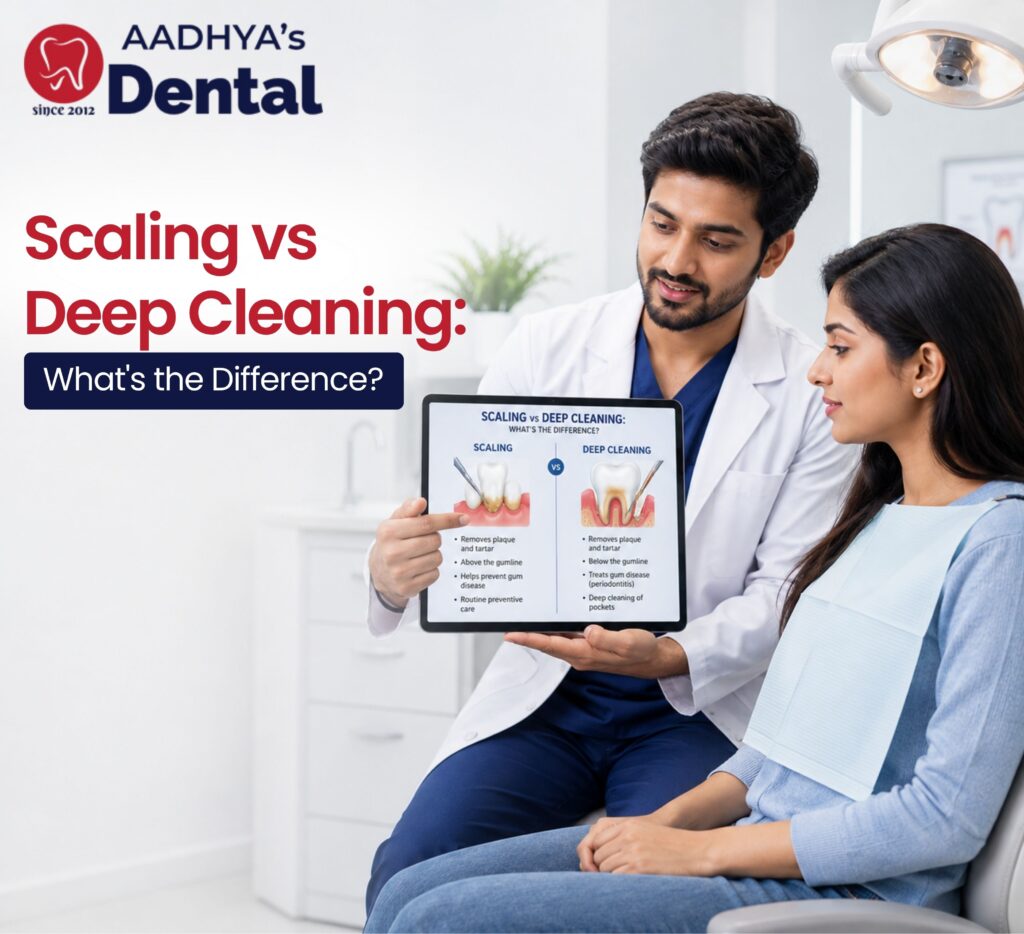
Scaling vs Deep Cleaning: Key Difference
The main difference between scaling and deep cleaning is the depth and purpose of the cleaning.
Routine scaling is primarily a preventive procedure for removing plaque and tartar from the visible tooth surfaces and gumline. Deep cleaning is generally used when gum disease has progressed and deposits are present below the gumline.
Routine Scaling
Scaling may:
- Remove plaque and tartar
- Clean the visible surfaces of teeth
- Reduce buildup around the gumline
- Help maintain healthy gums
- Support regular oral hygiene
- Be part of routine preventive dental care
Deep Cleaning
Deep cleaning may:
- Remove plaque and tartar below the gumline
- Clean periodontal pockets
- Smooth rough areas of the tooth roots
- Reduce bacterial deposits
- Help manage gum disease
- Support healthier gum tissue
The exact procedure recommended depends on the condition of your gums, teeth, and periodontal tissues.
Why Do Dentists Recommend Deep Cleaning?
When gum disease develops, bacteria and tartar can accumulate between the teeth and gums. Over time, the gum tissue may pull away from the teeth, creating spaces known as periodontal pockets.
These pockets can become difficult to clean with normal brushing and flossing. If left untreated, gum disease may progress and affect the supporting tissues around the teeth.
Deep cleaning allows the dental professional to clean these harder-to-reach areas. It is therefore different from a routine cleaning and is usually recommended after a dental examination indicates a need for periodontal treatment.
Does Scaling Damage the Teeth?
A common concern among patients is whether scaling can damage the enamel or make teeth weak.
When performed professionally and appropriately, dental scaling is intended to remove plaque and tartar deposits without unnecessarily damaging healthy tooth structure. Some patients may experience temporary sensitivity after cleaning, particularly if they had significant tartar buildup or gum recession.
It is important to follow your dentist’s recommendations after the procedure and maintain good oral hygiene at home.
Is Deep Cleaning Painful?
The experience can vary depending on the amount of inflammation, sensitivity, and the extent of cleaning required.
Because deep cleaning involves areas below the gumline, the dentist may use a local anaesthetic when appropriate to make the procedure more comfortable. Mild sensitivity or gum tenderness may occur temporarily after treatment.
Your dentist can explain what to expect based on your individual oral condition.
How Often Should You Get Dental Scaling?
There is no single schedule that is suitable for everyone. Some people may benefit from routine professional cleaning every six months, while others may need cleaning more frequently depending on their oral health.
Your dentist may recommend a cleaning schedule based on factors such as:
- Plaque and tartar buildup
- Gum health
- Oral hygiene habits
- Smoking or tobacco use
- Previous history of gum disease
- Existing dental conditions
- Individual risk factors
Regular dental check-ups help determine when professional cleaning is required.
Who May Need Deep Cleaning?
Deep cleaning may be considered for patients who show signs of periodontal disease, such as:
- Bleeding gums
- Swollen or red gums
- Persistent bad breath
- Gum recession
- Periodontal pockets
- Significant tartar below the gumline
- Loose teeth in advanced cases
- Changes in the way teeth fit together
However, these symptoms do not automatically mean that deep cleaning is necessary. A dentist needs to examine your gums and evaluate the overall condition before recommending treatment.
Can Scaling and Deep Cleaning Prevent Gum Disease?
Professional cleaning can play an important role in maintaining oral health. Removing plaque and tartar helps reduce the bacterial buildup that contributes to gum inflammation.
However, professional cleaning should not replace daily oral hygiene. Brushing twice a day, cleaning between the teeth, maintaining a balanced diet, and visiting your dentist regularly are all important parts of maintaining healthy gums and teeth.
What Happens During a Dental Cleaning at Aadhya’s Dental Clinic?
At Aadhya’s Dental Clinic, the dentist first evaluates your oral health to understand the condition of your teeth and gums. Dr. Mrudula can assess plaque and tartar accumulation, gum inflammation, and other signs that may indicate the need for routine or periodontal cleaning.
Depending on the findings, the recommended treatment may include routine scaling or a more comprehensive deep-cleaning procedure.
The goal is not simply to clean the teeth but to identify potential oral health concerns and provide treatment appropriate to the patient’s needs.
Scaling or Deep Cleaning: Which One Do You Need?
The answer depends on your gum and dental health.
If you have general plaque and tartar buildup without significant gum disease, routine scaling may be sufficient. If tartar and bacterial deposits have accumulated below the gums and there are signs of periodontal disease, your dentist may recommend deep cleaning.
It is better not to choose a procedure based only on price or what someone else has undergone. Every patient’s oral health is different.
A professional dental examination can help determine the appropriate treatment.
Frequently Asked Questions
1. Is scaling the same as deep cleaning?
No. Scaling is generally a routine procedure for removing plaque and tartar, while deep cleaning, or scaling and root planing, involves cleaning below the gumline and smoothing the root surfaces when periodontal treatment is required.
2. Can scaling whiten my teeth?
Scaling can remove certain surface stains and deposits, which may make teeth appear cleaner and brighter. However, scaling is not the same as professional teeth whitening.
3. How long does dental scaling take?
The duration depends on the amount of plaque and tartar present and the number of teeth being treated. Your dentist can provide a more specific estimate after examining your mouth.
4. Do I need deep cleaning if my gums bleed?
Bleeding gums can be a sign of gum inflammation or disease, but it does not automatically mean that deep cleaning is required. A dental examination is necessary to determine the cause and appropriate treatment.
5. Can I prevent tartar buildup?
You can reduce tartar buildup by brushing twice daily with fluoride toothpaste, cleaning between your teeth, maintaining good oral hygiene, avoiding tobacco, and attending regular dental check-ups and professional cleanings.
Maintain Healthy Teeth and Gums With the Right Cleaning
Scaling and deep cleaning serve different purposes, and choosing the right treatment depends on your individual oral health. Routine scaling can help maintain clean teeth and healthy gums, while deep cleaning may be recommended when gum disease requires more extensive treatment.
If you are experiencing bleeding gums, bad breath, gum swelling, tartar buildup, or other oral health concerns, consider scheduling a dental evaluation rather than delaying treatment.
At Aadhya’s Dental Clinic, Dr. Mrudula can assess your oral health and recommend a suitable cleaning approach based on your dental and gum condition. Regular professional dental care, combined with good oral hygiene at home, can help you maintain a healthier smile for the long term.
Website: https://aadhyasdental.com/
Address: Aadhya’s Dental | Best Dental Clinic in Nallagandla
Phone: +91-73962 35802