
A beautiful, confident smile can make a big difference in your personality and self-esteem. However, many people hesitate to undergo orthodontic treatment because they do not want visible metal braces affecting their appearance. If you are looking for a discreet way to straighten your teeth, lingual braces could be an excellent option.
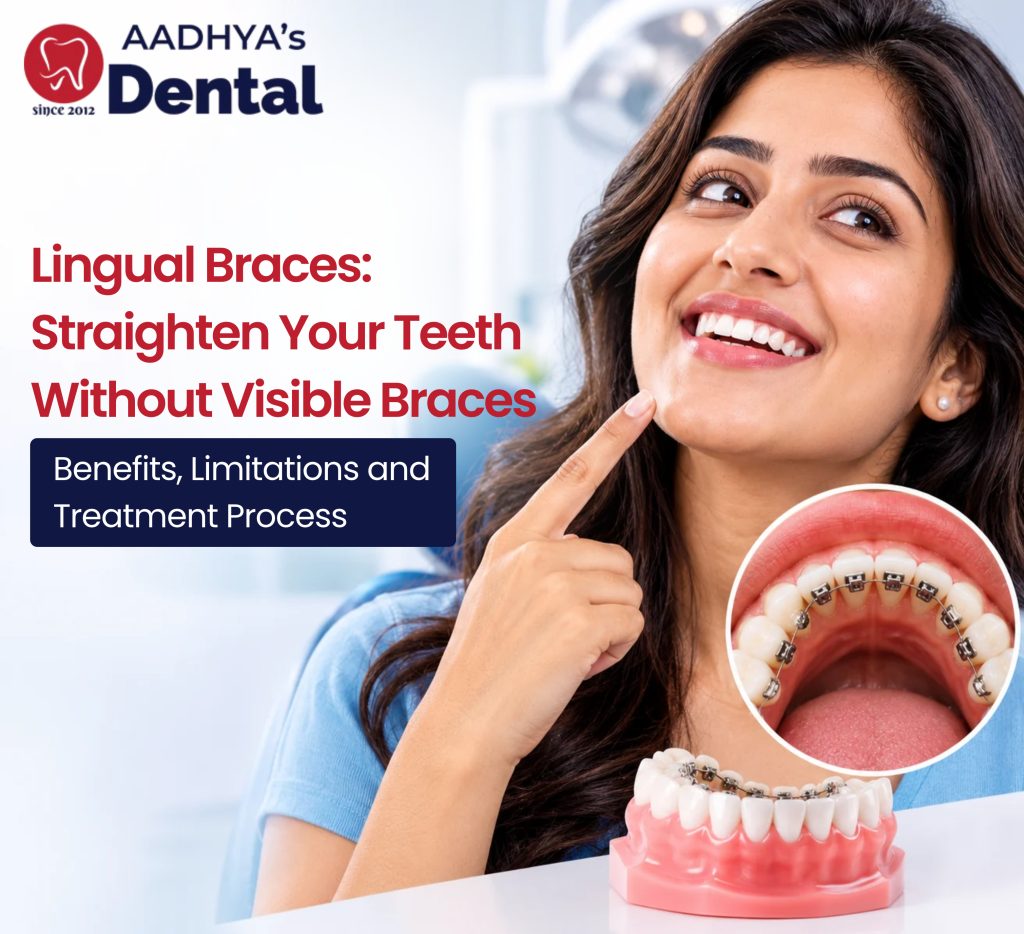
Lingual braces are designed to straighten teeth effectively while remaining almost invisible from the outside. Unlike traditional braces, which are attached to the front surface of the teeth, lingual braces are placed behind the teeth, making them a popular choice among working professionals, adults, and teenagers who prefer a more aesthetic orthodontic solution.
At Aadhya Dental Clinic, Dr. Mrudula helps patients understand different teeth-straightening options and choose an appropriate treatment based on their dental condition, lifestyle, and smile goals.
In this blog, let us explore what lingual braces are, their benefits, limitations, treatment process, and who can consider this treatment.
What Are Lingual Braces?
Lingual braces are a type of orthodontic appliance used to correct crooked teeth, gaps, overcrowding, and certain bite problems. They work similarly to traditional metal braces but differ in their placement.
In conventional braces, brackets and wires are fixed to the front surface of the teeth. In lingual braces, these brackets are attached to the inner surface of the teeth, facing the tongue.
Since the braces are positioned behind the teeth, they are not easily visible when you smile, speak, or interact with others.
Lingual braces use gentle, controlled pressure to gradually move teeth into their correct positions. Over time, this helps improve tooth alignment, bite function, and overall smile appearance.
Benefits of Lingual Braces
Lingual braces offer several advantages for people who want effective orthodontic treatment without compromising their appearance.
1. Almost Invisible Appearance
One of the biggest benefits of lingual braces is their discreet appearance. Since they are placed behind the teeth, other people generally cannot notice them during everyday conversations or social interactions.
This makes them a suitable option for professionals, teachers, public speakers, and individuals who frequently interact with people.
2. Effective Teeth Straightening
Lingual braces work using the same basic orthodontic principles as traditional braces. They apply controlled pressure to move teeth gradually into their desired positions.
They can help address several orthodontic concerns, including:
- Crooked or misaligned teeth.
- Gaps between teeth.
- Overcrowded teeth.
- Certain bite irregularities.
- Rotated teeth.
The suitability of lingual braces depends on the complexity of the individual case.
3. No Visible Brackets on the Front Teeth
Traditional braces are attached to the front surface of the teeth and can be noticeable when smiling. Lingual braces eliminate this concern because the brackets are positioned on the inner surfaces.
Patients can continue their daily activities without feeling self-conscious about visible orthodontic appliances.
4. Customized Treatment
Lingual braces can be customized according to the shape and alignment of a patient’s teeth. The brackets are designed to fit the inner surfaces, helping the orthodontist plan controlled tooth movements.
This personalized approach supports effective treatment and improved comfort.
5. Suitable for Adults and Professionals
Many adults avoid braces because they feel uncomfortable wearing visible metal brackets at work or during social events.
Lingual braces provide a discreet alternative for people who want to improve their smiles while maintaining a professional appearance.
Limitations of Lingual Braces
Although lingual braces offer several advantages, they may not be the perfect choice for everyone. Understanding their limitations helps patients make an informed decision.
1. Initial Tongue Discomfort
Since lingual braces are attached behind the teeth, they may initially irritate the tongue. Some patients experience mild soreness or discomfort while speaking or eating.
However, the tongue generally adapts to the braces over time.
2. Temporary Speech Difficulties
During the first few days or weeks, some patients may notice changes in their pronunciation. Certain sounds may feel difficult to pronounce because the tongue comes into contact with the brackets.
Practising speaking and reading aloud can help improve speech as the tongue adjusts.
3. More Challenging Oral Hygiene
Cleaning around lingual brackets can be difficult because they are positioned behind the teeth.
Food particles and plaque may accumulate around the brackets if proper brushing techniques are not followed.
Patients should maintain regular brushing, use interdental cleaning aids, and follow their dentist’s oral hygiene instructions.
4. Higher Treatment Cost
Lingual braces are generally more expensive than traditional metal braces. This is because they may require customized brackets, specialized equipment, and additional clinical expertise.
The overall cost depends on the treatment complexity, duration, and type of appliance used.
5. Not Suitable for Every Case
Some complicated orthodontic conditions may require alternative treatment approaches. The position of the teeth, bite condition, and available space must be carefully evaluated before recommending lingual braces.
A dental consultation is essential to determine whether this treatment is suitable.
What Is the Treatment Process for Lingual Braces?
Getting lingual braces involves several steps to ensure proper tooth movement and a comfortable treatment experience.
Step 1: Initial Dental Consultation
The first step is visiting your dentist or orthodontist for a complete examination.
At Aadhya Dental Clinic, Dr. Mrudula can assess your teeth, gums, bite alignment, and overall oral health to understand your orthodontic requirements.
The dentist may recommend dental photographs, X-rays, digital scans, or impressions to evaluate your condition.
Step 2: Treatment Planning
After examining your teeth, the dentist prepares an individualized treatment plan.
This includes identifying alignment issues, determining the expected tooth movements, and deciding whether lingual braces are the right option.
The estimated treatment duration and cost can also be discussed during this stage.
Step 3: Customized Bracket Preparation
Lingual braces are designed to fit the inner surfaces of your teeth.
Based on your dental scans or impressions, customized brackets may be prepared to match your tooth anatomy and treatment requirements.
Step 4: Placement of Lingual Braces
During the next appointment, the brackets are attached to the back surfaces of your teeth using dental bonding material.
An orthodontic wire is then placed through the brackets to begin applying gentle pressure.
The procedure is generally performed without surgery.
Step 5: Regular Follow-Up Appointments
Once your braces are fitted, regular dental visits are necessary to monitor tooth movement.
Your orthodontist may adjust the wires or appliance as required to ensure that your teeth are moving according to the treatment plan.
Following these appointments is important for achieving the desired results.
Step 6: Removal and Retainer Placement
Once your teeth reach their planned positions, the lingual braces are removed.
Your dentist may recommend retainers to help maintain the new alignment and prevent teeth from shifting back.
Wearing retainers as advised is an important part of long-term orthodontic care.
How Long Does Lingual Braces Treatment Take?
The treatment duration varies from person to person. It depends on the severity of misalignment, bite problems, tooth movement required, and individual response to orthodontic treatment.
In many cases, treatment may take approximately 18 to 36 months, although some cases may require less or more time.
Regular dental visits and following your orthodontist’s instructions can help keep the treatment on track.
How to Take Care of Lingual Braces
Proper oral hygiene is especially important when wearing lingual braces.
Here are some simple tips:
- Brush your teeth twice daily using a soft-bristled toothbrush.
- Clean carefully around the brackets and wires.
- Use interdental brushes or other cleaning aids recommended by your dentist.
- Rinse your mouth after meals.
- Avoid very hard, sticky, and chewy foods that may damage the appliance.
- Attend regular orthodontic appointments.
- Follow your dentist’s instructions regarding oral hygiene and appliance care.
Good oral hygiene helps reduce plaque accumulation, gum inflammation, and the risk of tooth decay during treatment.
Are Lingual Braces the Right Choice for You?
Lingual braces may be a good option if you want to straighten your teeth without having visible brackets on the front surfaces.
They can be particularly useful for adults and professionals who prefer a discreet orthodontic solution.
However, the right treatment depends on your dental condition, bite alignment, lifestyle, budget, and expectations.
At Aadhya Dental Clinic, Dr. Mrudula can evaluate your smile and explain whether lingual braces are suitable for your orthodontic needs. A proper consultation helps you understand the available treatment options and make a confident decision.
Final Thoughts
Lingual braces are an effective and discreet way to improve tooth alignment without the appearance of traditional front-facing braces. They offer benefits such as better aesthetics, customized treatment, and the ability to correct several orthodontic concerns.
Although they may involve initial tongue discomfort, speech adjustments, additional cleaning effort, and higher costs, they remain a valuable option for people who want a less visible approach to teeth straightening.
If you are considering orthodontic treatment, consult Dr. Mrudula at Aadhya Dental Clinic to explore whether lingual braces are the right choice for your smile.
Take the first step towards a straighter, healthier, and more confident smile!
Frequently Asked Questions (FAQs)
1. Are lingual braces completely invisible?
Lingual braces are placed behind the teeth, making them almost invisible when you smile or speak. They are a discreet alternative to traditional braces.
2. Are lingual braces painful?
You may experience mild discomfort or tongue irritation during the initial adjustment period. This usually improves as your mouth gets used to the braces.
3. How long do lingual braces take to straighten teeth?
Treatment commonly takes around 18 to 36 months, depending on the complexity of your dental condition and the required tooth movements.
4. Can I eat normally with lingual braces?
Yes, you can eat most foods, but it is better to avoid hard, sticky, and chewy foods that may damage the brackets or wires.
5. Are lingual braces better than traditional braces?
Lingual braces are less visible than traditional braces, making them suitable for people who prefer discreet treatment. However, the best option depends on your dental condition, treatment needs, and budget. Consult Dr. Mrudula at Aadhya Dental Clinic for guidance.