
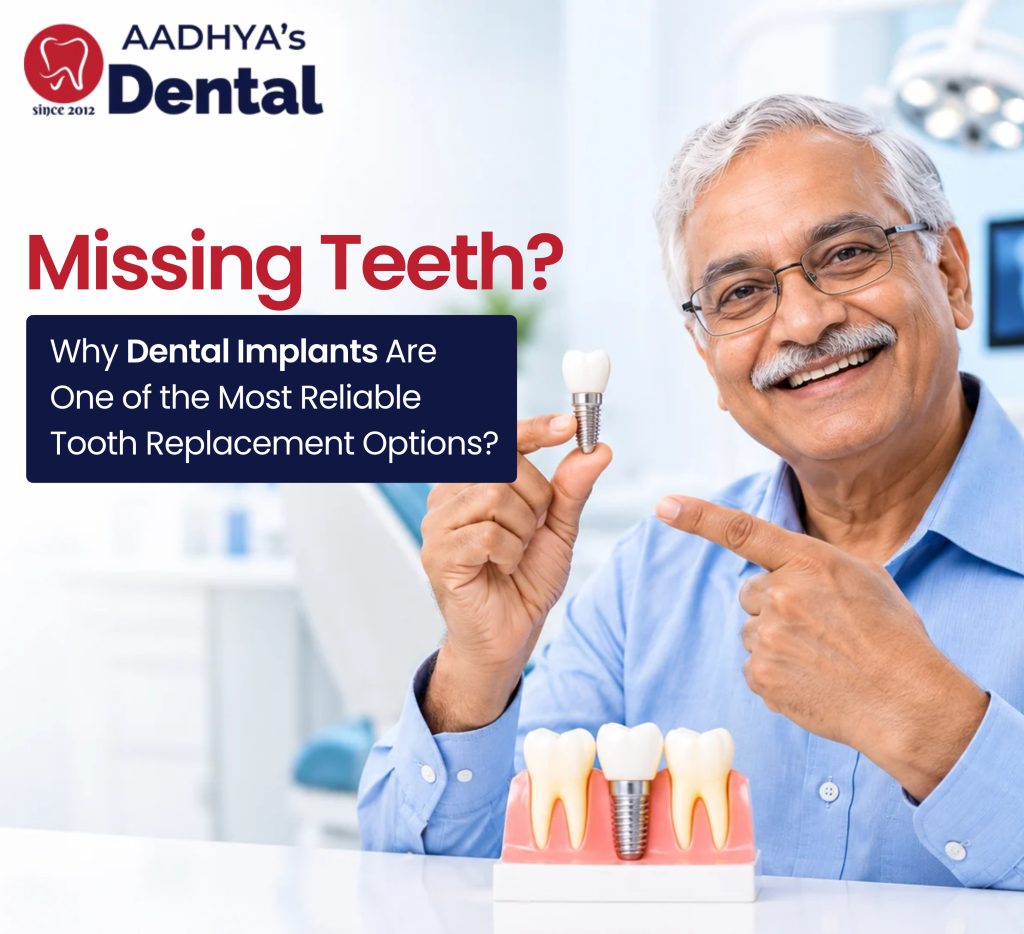
Missing teeth can affect more than just your smile. They can make chewing difficult, affect your speech, change your facial appearance, and reduce your confidence. Whether you have lost one tooth or multiple teeth, replacing missing teeth is important for maintaining good oral health.
Among the available tooth replacement options, dental implants are considered one of the most reliable and long-lasting solutions. They are designed to replace missing tooth roots and provide a strong foundation for artificial teeth that look and function like natural teeth.
If you are looking for dental implants in Nallagandla, understanding how dental implants work, their benefits, and the treatment process can help you make an informed decision.
At Aadhya’s Dental Clinic Nallagandla , Dr. Mrudula helps patients understand suitable tooth replacement options based on their dental condition and oral health requirements.
For further information about choosing the perfect time for your dental visit, also read: https://aadhyasdental.com/choosing-the-perfect-time-for-your-dental-visit/
1. What Are Dental Implants?
Dental implants are artificial tooth roots that are placed into the jawbone to support replacement teeth. They are commonly made from biocompatible materials such as titanium, which can integrate with the surrounding bone.
A dental implant generally consists of three main components:
- Implant Post: A small screw-like structure placed inside the jawbone to replace the natural tooth root.
- Abutment: A connecting component that attaches the implant post to the replacement tooth.
- Dental Crown: The visible artificial tooth that is designed to resemble a natural tooth.
Once the implant integrates with the jawbone, it provides stable support for the replacement tooth.
People searching for dental implants in Nallagandla can consult a dental professional to understand whether this treatment is suitable for their condition.
2. Why Are Dental Implants a Reliable Tooth Replacement Option?
Dental implants are widely preferred because they offer stability, functionality, and a natural appearance.
Here are some reasons why they are considered a reliable option.
Natural Look and Feel
One of the biggest advantages of dental implants is their natural appearance. The replacement crown is designed to match the colour, shape, and size of surrounding teeth.
Unlike removable dentures, dental implants are fixed in place and can feel more like natural teeth.
This makes them a suitable option for people who want to restore their smiles without compromising appearance.
Improved Chewing Ability
Missing teeth can make it difficult to chew certain foods comfortably. Dental implants provide stable support for replacement teeth, helping patients regain better chewing function.
Once the treatment is completed and the dentist confirms proper healing, patients can gradually return to their regular eating habits.
Helps Maintain Jawbone Health
When a natural tooth is lost, the jawbone in that area may gradually lose density because it no longer receives stimulation from the tooth root.
Dental implants help stimulate the jawbone through normal biting forces. This can help reduce bone loss in the area where the implant is placed.
Long-Term Tooth Replacement
With proper placement, regular dental check-ups, and good oral hygiene, dental implants can last for many years.
The longevity of dental implants depends on several factors, including bone health, gum health, lifestyle habits, and daily oral care.
Does Not Require Grinding Adjacent Teeth
Unlike traditional dental bridges, a single dental implant generally does not require reducing the neighbouring natural teeth for support.
This allows the surrounding healthy teeth to remain intact.
3. What Problems Can Missing Teeth Cause?
Ignoring missing teeth can lead to several oral health problems over time.
Some common issues include:
Difficulty Chewing: Missing teeth can make it challenging to bite and chew food properly.
Shifting of Nearby Teeth: The teeth next to an empty space may gradually move towards the gap, affecting dental alignment.
Jawbone Loss: The absence of natural tooth roots can contribute to bone resorption in the affected area.
Changes in Facial Appearance: Significant tooth loss and bone changes may affect facial support and appearance.
Speech Difficulties: Missing front teeth, in particular, can sometimes affect pronunciation and speech clarity.
Replacing missing teeth at the right time can help prevent some of these complications.
4. Who Is a Suitable Candidate for Dental Implants?
Dental implants can be suitable for people who have lost one or more teeth and want a fixed replacement option.
However, not everyone is immediately suitable for implant placement.
A dentist generally considers the following factors:
- Healthy gums and good oral hygiene.
- Sufficient jawbone density to support the implant.
- Overall health and medical history.
- Absence of uncontrolled gum infections.
- Healthy healing capacity.
- Commitment to regular dental visits and maintenance.
People with diabetes or other medical conditions may still be eligible, depending on how well their conditions are managed.
If there is insufficient jawbone, procedures such as bone grafting may sometimes be recommended before implant placement.
A consultation with an experienced dentist can help determine the most appropriate treatment plan.
5. What Is the Dental Implant Procedure?
Understanding the treatment process can help reduce anxiety and prepare you for the procedure.
The dental implant procedure generally involves the following stages.
Step 1: Initial Dental Consultation
The first step is a detailed dental examination. The dentist checks your teeth, gums, jawbone condition, and overall oral health.
Dental X-rays or 3D imaging may be recommended to evaluate bone structure and identify the appropriate implant placement location.
Step 2: Treatment Planning
After evaluating your dental condition, the dentist prepares a personalised treatment plan.
The number of implants, implant position, bone condition, and type of replacement crown are considered during planning.
Step 3: Implant Placement
The implant post is surgically placed into the jawbone under appropriate anaesthesia.
The procedure is planned carefully to ensure proper positioning and stability.
Step 4: Healing and Osseointegration
After implant placement, the jawbone gradually grows around the implant surface. This process is called osseointegration.
It helps create a stable connection between the implant and the jawbone.
Healing time varies depending on individual health and bone conditions.
Step 5: Placement of the Dental Crown
Once the implant has integrated sufficiently with the jawbone, an abutment and custom-made dental crown are attached.
The final crown is designed to match the surrounding teeth and restore the appearance and function of your smile.
6. Dental Implants vs Other Tooth Replacement Options
There are different ways to replace missing teeth. The right option depends on your oral health, budget, and personal preferences.
| Tooth Replacement Option | Key Features |
| Dental Implants | Fixed replacement supported by the jawbone |
| Dental Bridges | Fixed replacement supported by neighbouring teeth |
| Removable Dentures | Removable appliances used to replace missing teeth |
Dental implants offer the advantage of replacing the tooth root without relying on neighbouring teeth for support.
However, dental bridges and dentures may be more appropriate for certain patients. A dental examination helps determine the best solution.
7. How to Maintain Your Dental Implants
Proper maintenance is important to keep dental implants healthy and functional for many years.
Follow these simple oral care practices:
- Brush your teeth twice daily using a soft-bristled toothbrush.
- Clean between your teeth using dental floss or recommended interdental cleaning tools.
- Avoid smoking, as it can affect healing and implant health.
- Visit your dentist regularly for professional examinations.
- Avoid biting extremely hard objects.
- Follow your dentist’s post-treatment instructions.
Although dental implants cannot develop tooth decay like natural teeth, the surrounding gums can develop infections. Therefore, maintaining good oral hygiene is essential.
8. Why Choose Aadhya’s Dental Clinic for Dental Implants in Nallagandla?
Choosing the right dental clinic is an important step when considering tooth replacement treatment.
At Aadhya’s Dental Clinic, Nallagandla, patients can receive dental evaluations and personalised treatment recommendations based on their oral health needs.
Dr. Mrudula focuses on understanding each patient’s dental concerns and explaining suitable treatment options.
Whether you have lost a single tooth or multiple teeth, a proper dental examination can help identify the right approach to restoring your smile.
If you are searching for dental implants near Nallagandla, consulting a dental professional can help you understand the procedure, expected healing time, and treatment requirements.
9. When Should You Consider Dental Implants?
You may consider dental implants if:
- You have lost one or more permanent teeth.
- You experience difficulty chewing because of missing teeth.
- You want a fixed alternative to removable dentures.
- You have sufficient jawbone support or are suitable for additional bone procedures.
- You want to restore your smile and improve chewing function.
It is generally advisable not to ignore missing teeth for long periods. Early evaluation can help identify changes in the jawbone and surrounding teeth.
10. Restore Your Smile with Dental Implants in Nallagandla
Missing teeth do not have to affect your confidence and everyday activities permanently. Modern dental implant solutions can help restore your smile, improve chewing ability, and provide stable tooth replacement.
The success of dental implant treatment depends on proper evaluation, treatment planning, implant placement, and long-term maintenance.
If you are considering dental implants in Nallagandla, Hyderabad, visit Aadhya’s Dental Clinic and consult Dr. Mrudula to understand your tooth replacement options.
Take the first step towards a healthier and more confident smile with personalised dental care.
Frequently Asked Questions (FAQs)
1. Are dental implants a permanent solution for missing teeth?
Dental implants are designed as a long-term tooth replacement option. With proper oral hygiene and regular dental check-ups, they can last for many years.
2. Is dental implant treatment painful?
The procedure is generally performed under local anaesthesia, so patients should not feel pain during implant placement. Some discomfort and swelling may occur during recovery.
3. How long does dental implant treatment take?
Treatment time varies depending on bone condition, healing, and individual requirements. It may take several months to complete.
4. Can I get dental implants for multiple missing teeth?
Yes. Dental implants can be used to replace multiple missing teeth. The number of implants required depends on the patient’s oral health and treatment plan.
5. Where can I get dental implants in Nallagandla?
You can visit Aadhya Dental Clinic in Nallagandla, Hyderabad, and consult Dr. Mrudula for a dental examination and personalised implant treatment recommendations.
Book your appointment at Aadhya Dental Clinic, Nallagandla, for dental implants. Call +91 73962 35802 today!