Facial injuries can happen unexpectedly due to road traffic accidents, sports injuries, falls, workplace accidents, or physical trauma. While some injuries may appear minor on the outside, fractures involving the facial bones can affect your ability to breathe, speak, chew, see properly, and even alter your facial appearance if left untreated.
Prompt diagnosis and treatment by an experienced Oral and Maxillofacial Surgeon are essential to restore both function and facial aesthetics.
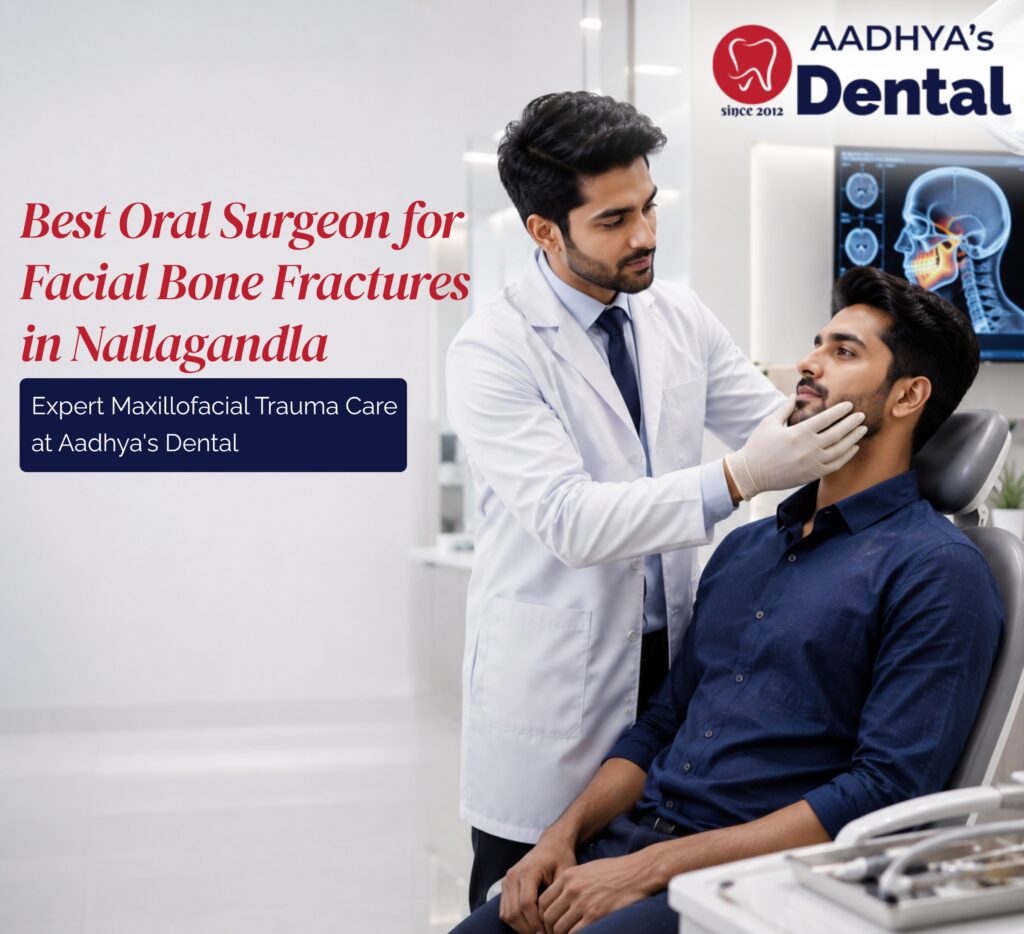
If you’re searching for the best oral surgeon for facial bone fractures in Nallagandla, Aadhya’s Dental offers comprehensive evaluation, diagnosis, and management of oral and maxillofacial injuries. Patients from Nallagandla, Tellapur, Lingampally, Gopanpally, Osman Nagar, Kollur, Kondapur, Miyapur, Chandanagar, BHEL, Financial District, and nearby areas trust our team for compassionate care and personalised treatment planning.
In this guide, we’ll explain what facial bone fractures are, their symptoms, available treatment options, and when to seek urgent care.
More Info: https://aadhyasdental.com/best-experienced-oral-surgeon-near-me-in-nallagandla-tellapur-and-surrounding-areas/
What Is a Facial Bone Fracture?
A facial bone fracture is a break or crack in one or more bones of the face. These injuries may involve:
- Upper jaw (Maxilla)
- Lower jaw (Mandible)
- Cheekbone (Zygomatic bone)
- Eye socket (Orbit)
- Nasal bones
- Chin region
- Facial buttresses
Depending on the severity, facial fractures may affect eating, speaking, breathing, vision, and facial symmetry.
Common Causes of Facial Bone Fractures
Facial fractures may result from:
Road Traffic Accidents
Motorcycle and car accidents remain one of the leading causes of facial injuries.
Sports Injuries
Contact sports such as cricket, football, martial arts, hockey, and cycling can result in facial trauma.
Falls
Children, elderly individuals, and people working at heights may sustain facial fractures after accidental falls.
Workplace Accidents
Industrial injuries involving heavy machinery or falling objects can affect the facial bones.
Physical Assault
Direct impact to the face during an assault can cause fractures of the jaw or cheekbones.
Common Types of Facial Bone Fractures
Mandibular (Lower Jaw) Fractures
The lower jaw is one of the most commonly fractured facial bones.
Symptoms may include:
- Pain while opening the mouth
- Difficulty chewing
- Loose teeth
- Swelling
- Misaligned bite
- Numbness of the lower lip or chin
Maxillary (Upper Jaw) Fractures
These injuries often occur after high-impact trauma and may affect facial stability.
Symptoms include:
- Facial swelling
- Loose upper teeth
- Difficulty biting
- Nosebleeds
- Facial deformity
Zygomatic (Cheekbone) Fractures
Cheekbone fractures may alter facial symmetry and affect vision.
Symptoms include:
- Flattened cheek appearance
- Difficulty opening the mouth
- Double vision
- Swelling around the eye
- Numbness of the cheek
Orbital (Eye Socket) Fractures
These fractures require careful evaluation because they may affect eye movement and vision.
Symptoms include:
- Double vision
- Eye pain
- Swelling
- Restricted eye movement
- Sunken appearance of the eye
Nasal Bone Fractures
These are among the most common facial fractures.
Symptoms include:
- Nosebleeds
- Swelling
- Difficulty breathing
- Crooked nose
- Facial bruising
Signs You May Have a Facial Bone Fracture
Seek immediate evaluation if you experience:
- Severe facial pain
- Swelling
- Bruising
- Difficulty opening your mouth
- Difficulty chewing
- Loose or displaced teeth
- Bite changes
- Numbness of the face
- Bleeding from the mouth or nose
- Double vision
- Facial asymmetry
These symptoms should never be ignored after facial trauma.
How Are Facial Bone Fractures Diagnosed?
A thorough assessment is essential for accurate diagnosis.
Evaluation may include:
Clinical Examination
Your oral and maxillofacial surgeon examines:
- Jaw movement
- Bite alignment
- Facial symmetry
- Tooth injuries
- Nerve function
Digital X-rays
Useful for identifying jaw fractures and dental injuries.
CT Scan
A CT scan is often the preferred imaging method for evaluating complex facial fractures because it provides detailed three-dimensional views of the facial skeleton.
Treatment for Facial Bone Fractures
Treatment depends on:
- Location of the fracture
- Severity
- Bone displacement
- Number of fractured bones
- Associated dental injuries
- General health of the patient
Observation
Small, non-displaced fractures may heal with careful monitoring, dietary modifications, and follow-up appointments when clinically appropriate.
Closed Reduction
Some fractures can be stabilised without surgical exposure by repositioning the bones and limiting jaw movement when indicated.
Open Reduction and Internal Fixation (ORIF)
Displaced or unstable facial fractures often require surgery.
During ORIF:
- Bones are carefully repositioned.
- Small titanium plates and screws stabilise the fracture.
- Normal facial structure is restored.
Titanium plates used in maxillofacial surgery are biocompatible and designed to provide stable fixation.
Treatment of Associated Dental Injuries
Facial trauma may also involve:
- Broken teeth
- Tooth displacement
- Tooth loss
- Root fractures
These injuries are managed as part of the overall treatment plan.
Why Early Treatment Is Important
Delaying treatment may increase the risk of:
- Permanent facial deformity
- Improper healing
- Chronic jaw pain
- Bite problems
- Difficulty chewing
- Nerve damage
- Infection
- Long-term functional impairment
Prompt treatment generally leads to better functional and cosmetic outcomes.
Recovery After Facial Fracture Treatment
Recovery varies depending on the severity of the injury.
Patients are often advised to:
- Follow a soft diet for the recommended period
- Take prescribed medications
- Maintain excellent oral hygiene
- Avoid smoking and alcohol during healing
- Attend scheduled follow-up visits
- Avoid strenuous physical activity until cleared by the surgeon
Following postoperative instructions carefully supports proper healing.
Why Choose Aadhya’s Dental for Facial Trauma Care?
Patients from Nallagandla and surrounding areas choose Aadhya’s Dental because we focus on comprehensive diagnosis, individualised treatment planning, and patient-centred care.
Our approach includes:
- Comprehensive trauma evaluation
- Digital diagnostic imaging
- Personalised treatment planning
- Management of jaw and facial injuries
- Dental trauma care
- Postoperative follow-up
- Patient education and rehabilitation guidance
We are committed to helping patients regain both function and confidence after facial injuries.
When Should You Seek Immediate Medical Attention?
Seek urgent evaluation if facial trauma is accompanied by:
- Difficulty breathing
- Heavy or uncontrolled bleeding
- Loss of consciousness
- Severe facial swelling
- Vision changes
- Persistent vomiting
- Suspected jaw fracture
- Difficulty swallowing
These situations require emergency medical assessment.
Frequently Asked Questions (FAQs)
1. What is the most common facial bone fracture?
The nasal bones and lower jaw (mandible) are among the most commonly fractured facial bones.
2. Can a fractured jaw heal without surgery?
Some non-displaced fractures may heal without surgery under close supervision. However, displaced or unstable fractures often require surgical treatment to restore proper alignment and function.
3. How do I know if my jaw is fractured?
Common signs include pain, swelling, difficulty opening the mouth, changes in your bite, loose teeth, numbness, and difficulty chewing. A clinical examination and imaging are needed for diagnosis.
4. Are titanium plates safe?
Yes. Titanium plates and screws commonly used in maxillofacial surgery are biocompatible, strong, and widely accepted for stabilising facial fractures.
5. How long does it take for facial fractures to heal?
Healing times vary depending on the injury and treatment, but many fractures begin to unite over several weeks. Your surgeon will monitor healing during follow-up visits.
6. Will facial fractures affect my appearance permanently?
Early diagnosis and appropriate treatment can often restore facial symmetry and function. The outcome depends on the severity and location of the injury.
7. Can facial fractures damage teeth?
Yes. Facial trauma may also cause chipped teeth, loose teeth, root fractures, or tooth loss, which may require additional dental treatment.
8. What foods should I eat after jaw fracture treatment?
A soft diet is commonly recommended during the healing period. Your surgeon will provide specific dietary instructions based on your treatment.
9. Is a CT scan always necessary?
Not always. Simple fractures may be assessed with dental X-rays, while complex facial injuries often require CT imaging for detailed evaluation.
10. When should I see an oral and maxillofacial surgeon after facial trauma?
You should seek evaluation as soon as possible after significant facial trauma, especially if you have pain, swelling, bite changes, loose teeth, numbness, or difficulty opening your mouth.
Conclusion
Facial bone fractures are serious injuries that require prompt diagnosis and appropriate treatment to restore both function and facial appearance. Delaying care can increase the risk of complications such as improper healing, chronic pain, bite problems, and long-term cosmetic concerns.
At Aadhya’s Dental, Nallagandla, our team is committed to providing comprehensive evaluation and personalised care for patients with facial injuries. From jaw fractures and dental trauma to complex maxillofacial conditions, we focus on evidence-based treatment and long-term recovery.
If you’re searching for the best oral surgeon for facial bone fractures in Nallagandla, maxillofacial trauma treatment near Tellapur, or a jaw fracture specialist near Lingampally, Aadhya’s Dental is here to help. We proudly serve patients from Nallagandla, Tellapur, Lingampally, Gopanpally, Osman Nagar, Kollur, Kondapur, Miyapur, Chandanagar, BHEL, Financial District, Serilingampally, and surrounding areas, providing compassionate, high-quality care for oral and facial trauma.
Important: Facial injuries following major accidents should first be evaluated in a hospital emergency department, especially if they involve breathing difficulties, loss of consciousness, significant bleeding, or suspected head or neck injuries. Once the patient is medically stabilised, an Oral and Maxillofacial Surgeon plays a key role in managing facial bone fractures and associated oral injuries.