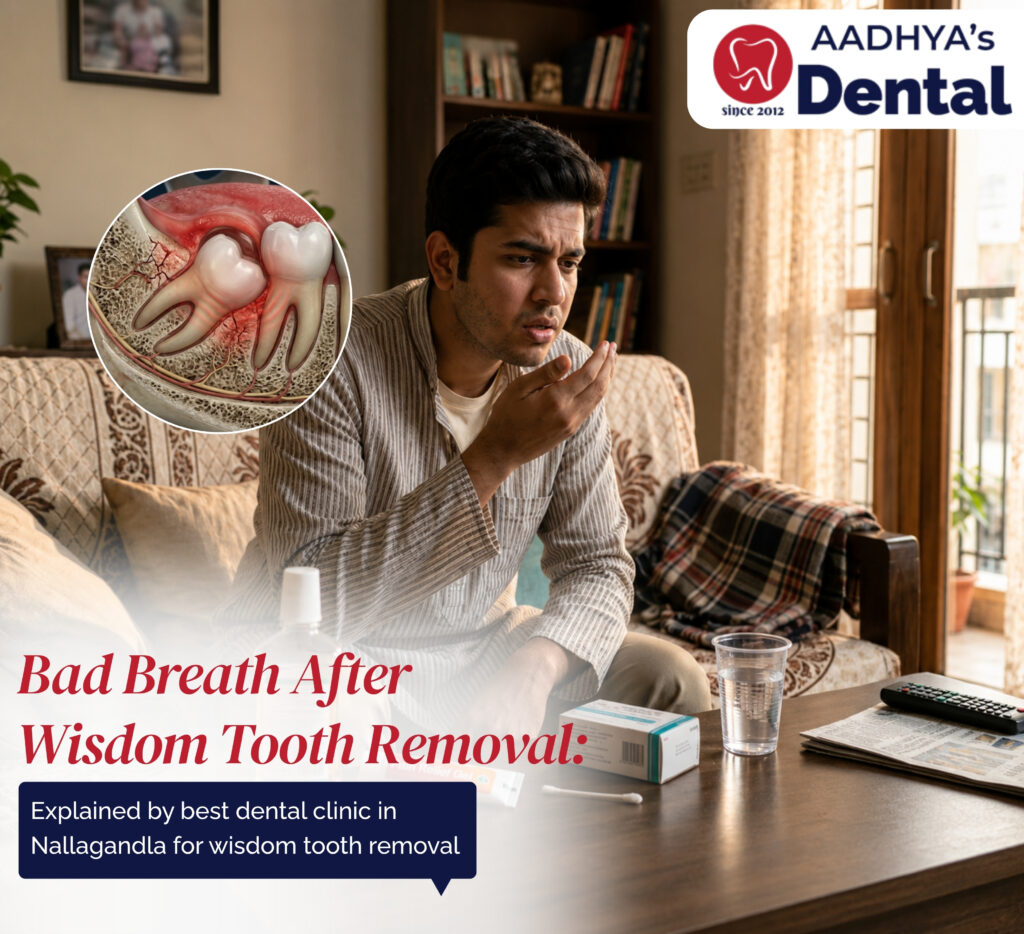
Wisdom tooth removal is one of the most common oral surgery procedures performed at Aadhya’s Dental, Nallagandla. While most patients recover smoothly, many become concerned when they notice bad breath or an unpleasant taste in their mouth after the extraction.
A common question patients ask Dr Mrudula is:
“Is bad breath after wisdom tooth removal normal, or is it a sign of infection?”
The answer depends on the stage of healing and the symptoms accompanying the bad breath. In this article, we explain why bad breath can occur after wisdom tooth extraction, when it is considered normal, and when you should visit a dentist immediately.
Is Bad Breath Normal After Wisdom Tooth Removal?
Yes, mild bad breath is often normal during the first few days after wisdom tooth extraction.
After the tooth is removed, a blood clot forms inside the extraction socket. This clot protects the underlying bone and nerves while the area heals. During this healing phase, food debris, bacteria, and healing tissues can temporarily produce an unpleasant odour or taste.
Most patients notice improvement within a few days when proper oral hygiene instructions are followed.
Common Causes of Bad Breath After Wisdom Tooth Extraction
1. Normal Healing Process
During the first week after extraction, healing tissues and the blood clot may create a slight odour.
This is generally not a cause for concern if:
- Pain is gradually decreasing
- Swelling is reducing
- There is no pus discharge
- Fever is absent
2. Food Trapped in the Extraction Site
The wisdom tooth socket can act like a small pocket where food particles become lodged.
Common symptoms include:
- Bad breath
- Bad taste in the mouth
- Feeling something stuck in the extraction area
This is especially common after lower wisdom tooth removal.
3. Poor Oral Hygiene During Recovery
Many patients avoid brushing near the surgical site because they fear disturbing the extraction area.
As a result:
- Bacterial growth increases
- Plaque accumulates
- Bad breath develops
Maintaining proper oral hygiene while following your dentist’s instructions is essential for smooth healing.
4. Dry Socket
Dry socket is one of the most common complications after wisdom tooth extraction.
It occurs when the protective blood clot becomes dislodged or dissolves prematurely, exposing the underlying bone.
Symptoms of dry socket include:
- Severe throbbing pain 2–5 days after extraction
- Pain radiating to the ear or jaw
- Bad breath
- Unpleasant taste
- Visible empty socket
Dry socket requires professional treatment and should not be ignored.
5. Infection at the Extraction Site
An infection can develop if bacteria enter the surgical site.
Warning signs include:
- Persistent bad breath
- Swelling that worsens instead of improving
- Pus discharge
- Fever
- Difficulty opening the mouth
- Increasing pain
If you notice these symptoms, immediate dental evaluation is recommended.
Warning Signs That Need Immediate Dental Attention
Contact your dentist if you experience:
✔ Severe bad breath that continues beyond one week
✔ Pus or yellow discharge from the extraction site
✔ Fever or chills
✔ Increasing facial swelling
✔ Severe pain after initial improvement
✔ Difficulty swallowing
✔ Difficulty opening the mouth
✔ Persistent foul taste despite cleaning
These symptoms may indicate infection or dry socket and require professional treatment.
How to Reduce Bad Breath After Wisdom Tooth Removal
Follow Salt Water Rinses
Warm salt water rinses help:
- Reduce bacteria
- Remove food debris
- Promote healing
Always follow your dentist’s post-operative instructions regarding when to begin rinsing.
Maintain Gentle Oral Hygiene
Continue brushing the remaining teeth carefully.
Avoid aggressive brushing directly over the extraction site during the initial healing period.
Stay Hydrated
Dry mouth encourages bacterial growth and bad breath.
Drink plenty of water throughout the day unless instructed otherwise.
Avoid Smoking and Tobacco
Smoking significantly increases the risk of:
- Dry socket
- Delayed healing
- Bad breath
- Infection
Avoid smoking completely during the recovery period.
Attend Follow-Up Appointments
Regular follow-up visits allow your dentist to monitor healing and identify problems before they worsen.
How Long Does Bad Breath Last After Wisdom Tooth Extraction?
In uncomplicated cases, mild bad breath usually improves within:
- 3–7 days after extraction
Complete healing of the socket can take several weeks, but the unpleasant odour typically disappears much earlier.
If bad breath persists beyond a week or worsens, a dental examination is advised.
Wisdom Tooth Removal at Aadhya’s Dental, Nallagandla
At Aadhya’s Dental, Nallagandla, wisdom tooth extractions are performed by experienced dental professionals using modern techniques designed to ensure comfortable treatment and faster recovery.
Our team provides:
- Comprehensive wisdom tooth evaluation
- Painless anaesthesia techniques
- Surgical wisdom tooth removal
- Dry socket management
- Post-extraction care guidance
- Emergency dental treatment when required
We regularly treat patients from Nallagandla, Tellapur, Lingampally, Gopanpally, BHEL, Chandanagar, Financial District, Kondapur, Serilingampally, and nearby areas.
Expert Advice from Dr Mrudula
“Bad breath after wisdom tooth removal is often part of the normal healing process, but persistent foul odour accompanied by pain, swelling, or discharge should never be ignored. Early evaluation helps prevent complications and ensures faster recovery.”
Book a Wisdom Tooth Consultation in Nallagandla
If you are experiencing bad breath, pain, swelling, or discomfort after wisdom tooth extraction, visit Aadhya’s Dental, Nallagandla, for a professional evaluation.
Our experienced dental team can determine whether your symptoms are part of normal healing or require treatment, helping you recover comfortably and safely.
Aadhya’s Dental, Nallagandla
Call/WhatsApp: 7396235802